Efficiency and cost control are top priorities for utilities as they navigate rising energy demand, regulatory pressure, and aging infrastructure. Full Article »
Articles under Communications
Milsoft Current News December 2025 Edition
25.2 In Beta Testing!

Version 25.2 for Engineering & Operations customers is now in beta testing, and it includes several exciting updates. Once testing and review are complete, we’ll share full details of the enhancements along with upgrade instructions for all E&O customers.
Milsoft Hosted Communications Platform Has Been Upgraded to Version 24.53!

A cornerstone of the 24.53 release is the introduction of Auto Transcribe, a novel service enabling the automatic transcription of messages within the Milsoft Communications Platform. This feature supports multiple transcription providers, including OpenAI’s Whisper, AssemblyAI, and upcoming integration with Deepgram in version 25.54, offering versatile options for BLS, IVR, and OMS functionalities.
Further enhancing the Business Logic Server (BLS) module, Milsoft has expanded BLS Inquiry capabilities to include GLDS, InvoiceCloud’s IVRAdvancedSearch, and NISC, significantly improving data retrieval efficiency. BLS Payment functionality sees notable upgrades with “Pay by Profile” supporting InvoiceCloud, Meridian OpenOne, and SEDC Json Payment Gateway, alongside the introduction of “Simple Pay” for streamlined text-based payments.
Texting enhancements are extensive, featuring configurable exact action word matches, dynamic URL placeholders, and refined control over two-way texting confirmations based on outage status. The system also now detects excessive inbound texts and integrates with Soprano Texting. A critical new capability is Two-Way Opt-In Tracking via Milsoft, which meticulously manages opted-in phone numbers for texting communications, ensuring compliance and focused outreach.
User administration in BLS has been refined with optional email addresses for users, the implementation of Multi-factor Authentication (MFA) per utility for enhanced security, and a new “Assist User in Security Requirements” tool to facilitate user support. A simplified “API User” type is also introduced for system-to-system integrations, optimizing resource utilization.
Enhancements for BLS Open Issues include expanded resolve/un-resolve functionality, service type modification, and ownership assignment, aiming to improve Issue Resolution workflows. Milsoft OCM will also gain columns for message existence and transcriptions, alongside an embedded MP3 player for direct audio playback.
This release continues the reduction of technical debt by deprecating WebIVR functionality (now integrated into BLS) and moving all IVREngine Legacy Inquiry interfaces to BLS, ensuring a modern and efficient platform architecture.
To learn more, please navigate to the Milsoft Communications page on mymilsoft.com to access the two new documents added to the Document Library section.
More Information: Milsoft Communications
Enhance Your Experience with CIS v25

In v25, the latest version of our Customer Information System (CIS), we are excited to introduce several new features to enhance the user experience and automate processes. One of the standout additions is the ability to send service orders to the field and automatically return them through FieldSyte.
We are currently working on enhancing this for the next version (v26), including Automatically Closing unmetered services when a metered service is closed, coordinating the return of separate services, read-in and read-out via AMI, and finally sending connect and disconnect commands directly from service orders.
Additionally, in v25, we’ve added device data for AMI and ERTs, making this data viewable in InfoCenter. External devices for Water/Gas, etc, can be changed out on a Service Order, and device data is available for all services, including unmetered services.
We have also enhanced our Location processes to include uploading locations from planning committees and GIS, and auto-numbering location numbers as they are created in these systems. These improvements are leading to the automation of creating a location directly from FieldSyte in the near future.
Looking ahead, we are actively working on several innovative features that will further automate and simplify processing in CIS. You can help choose and prioritize these features on MyMilsoft.com by submitting and voting on product enhancements.
Your Voice, Our Roadmap: Milsoft Puts You in the Driver’s Seat

This summer, Milsoft launched a game-changing new tool: UserVoice on MyMilsoft.com! We’ve made a commitment to put the power of product enhancement decisions directly into your hands, ensuring our software roadmap truly reflects the needs of your utility.
How It Works: Vote, Suggest, Influence
UserVoice is your dedicated platform for shaping the future of Milsoft’s products. Here’s what you can do right now on MyMilsoft.com:
- Vote on Existing Ideas: Review detailed write-ups of proposed product enhancements and cast your vote to instantly signal what matters most to your operations.
- Propose New Features: Have an innovative idea that will make your job easier? Don’t see it on the list? You can directly submit your own enhancement ideas for the community to vote on.
- Contribute Context: Elevate existing recommendations by adding comments that provide valuable perspective, real-world scenarios, and detailed reasoning for why a feature is essential.
Transparency in Action
The Milsoft Product Team is actively leveraging the results from UserVoice to finalize our product roadmaps and prioritize future software releases.
But our commitment doesn’t end there:
Once a voted-upon enhancement enters development, you’ll receive progress updates directly within UserVoice. You’ll know exactly which release your requested feature is targeted for, giving you unprecedented visibility into our development cycle.
We’ve already seen incredible engagement, with over 400 votes and comments contributing to our pipeline. Don’t let your brilliant ideas remain unheard!
Log on to MyMilsoft.com today and make sure your voice shapes the next evolution of your Milsoft software!
The 2026 Regional Training Schedule

This year we are offering training in Nashville,TN, Ft Valley, GA, Pensacola Beach, FL, and Dallas, Texas. If you are looking to increase or refresh your Milsoft software knowledge or if there’s a new hire that could benefit from the training, this is your or their chance to get the quality training needed.
Access the training schedule via mymilsoft.com
Brian Lassiter to Serve as the 2026 IEEE REPC Executive Committee Chair!
Milsoft’s own Brian Lassiter, VP of Product, will serve as this year’s IEEE REPC Executive Committee Chair. Brian plans to bring the entire engineering staff to the conference to help answer all your questions.
The event will be held April 1–3 at the Hilton Downtown in Tampa, Florida. If you’re new to the industry or unfamiliar with REPC, this conference focuses on reliability, resiliency, and maintainability in electric power and energy systems. We’d love to see you there!
Save the Date: Milsoft Users Conference 2026

Mark your calendars! The 2026 Milsoft User’s Conference will take place June 16–18, 2026, at the JW Marriott Austin, Texas. Our conference continues to grow each year, bringing together utility professionals for learning, networking, and collaboration.
The JW Marriott Austin offers excellent meeting spaces and is right in the heart of downtown, putting you close to Austin’s famous live music, local dining, and cultural attractions. Take some time to explore Lady Bird Lake, enjoy the vibrant food scene, or experience the city’s art and music offerings.
Stay tuned for more on sessions, speakers, and social events — you won’t want to miss this chance to connect with peers and explore everything Austin has to offer.
Save the date: June 16–18, 2026 — we can’t wait to see you there!
Milsoft To Increase Benefit of Being a Presenter at the Users Conference

Milsoft recognizes the tremendous value that comes from customers sharing their software and operational expertise with fellow users. To encourage more of these shared experiences, we’re offering a 100% registration fee waiver for any customer presentation accepted into the conference agenda.
If you have a compelling story about your utility and how you’ve used Milsoft software, we’d love to hear it—and so will other utilities.
Contact Us About Presenting
Off the Clock: Julie Henry

Julie Henry became a valued member of the Milsoft team with the acquisition of Daffron & Associates in 2020. For 18 years, she has proudly served our customers in various roles, including project management, account management, and sales.
When off the clock, Julie and her husband, Mike, enjoy spending time outdoors with their family. Camping, boating, hunting, and hiking keep them active throughout the year.
Want to share an “Off the Clock” story with us? We’d love to share it! Send your story and picture to christy.fayard@milsoft.com.
Top 5 Challenges Facing Electric Utility CEO’s Today

While there are many issues CEO’s face daily, we’ll focus on the broader industry challenges facing CEO’s in the here and now.
- Surging Power Demand from AI & Data Centers
- Data center-driven electricity use is rising sharply—currently 6–8% of U.S. generation, projected to reach 11–15% by 2030 DeloitteFinancial Times.
- This demands urgent investment in infrastructure—utilities are ramping up capital expenditures, expected to reach $212 billion in 2025 (up 22% from the prior year) Financial Times.
- Ground-level implications include strained grid capacity and the risk of transferring costs to consumers, prompting pushback from regulators and the public Financial TimesTom’s HardwareWall Street Journal.
- Aging Infrastructure and Grid Resilience
- More than 70% of the U.S. grid is over 25 years old, leaving it vulnerable to failures, extreme weather, and other risks Utility Dive.
- Addressing this entails modernizing physical assets and deploying predictive maintenance—leveraging digital twins and condition monitoring systems to avoid disruptions Utility Dive.
- Cybersecurity and Smart-Grid Vulnerabilities
- As grids become more digitized and interconnected—especially via smart grid components—attack surfaces broaden, increasing cyber risk Utility DiveWikipedia.
- Cyberattacks have surged (71% increase noted recently), making strengthened defenses, NERC CIP compliance, AI-based threat detection, and response planning non-negotiable priorities Utility Dive.
- Workforce Shortages and Talent Retention
- Utilities face a significant talent gap: nearly half of the current workforce is expected to retire within the next decade, and non-retirement attrition is also climbing Utility Dive.
- CEOs must invest in recruitment, digital skills training (especially around AI/ML), mentorship programs, career development, and diversity to ensure institutional knowledge isn’t lost Utility Dive.
- Policy & Regulatory Uncertainty
- Federal policy swings—such as funding rollbacks or deregulation—introduce confusion around clean energy programs and planning com.
- Simultaneously, regulatory frameworks struggle to keep pace with evolving grid needs: permitting delays, funding ambiguity, and unclear cost allocation models (e.g., who pays for data-center infrastructure) add complexity comAdvanced Energy UnitedRedditS&P Global.
Milsoft Current News June 2025 Edition

SUMMER 2025 EDITION
New User Feedback System

Milsoft has launched a new system that allows you to vote on existing enhancements and create new ideas. This new UserVoice system can be accessed by logging into MyMilsoft.com and clicking on your desired product area. There you will see a new section containing the top ranked ideas for that product and the ability to go into the UserVoice system and vote for yourself. Have a great idea that’s not on the list, write it up and post it for others to view. As we start work on these items, the Milsoft product team will update the UserVoice system with a status and expected release version. We hope you’ll add this tool to your toolbox to continue to help us advance our products for you.
Coming Soon: Version 25.1 Beta Release

Milsoft’s upcoming Version 25.1 release—now in Beta—introduces major usability upgrades across WindMil, DisSPatch, and OMS. The new Display Tab offers a centralized way to control Map Layers, Map Points, Outage Overlays, and Weather Maps. WindMil users will benefit from Field Preview windows, updated capacitor analysis behavior, and refined concentric neutral cable data. DisSPatch users will find enhanced tag sizing controls and more flexible crew assignment in the Assessment Manager. OMS enhancements include AI-powered voice transcription for IVR, improved fault locator options, and a new integration with Verizon Connect AVL. The public-facing Web Outage Viewer now supports Unauthenticated Outage Reporting and hides outages from view. AMI Auto Restore can also be set to act only on verified outages. This feature-rich release streamlines workflows, saves time, and brings more automation and insight to your operations. Stay tuned—the full rollout is just a few weeks away, packed with tools our users have been asking for.
UC 2025 in the Books

We set yet another record attendance at the 2025 UC. A sold out Expo with some of the industries best vendors, over 100 sessions dedicated to the products you use, and a lot of fun; Nashville had it all. We want to thank everyone for taking the time to come to Nashville and enjoy the conference with us.

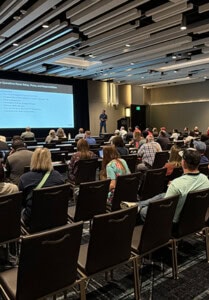
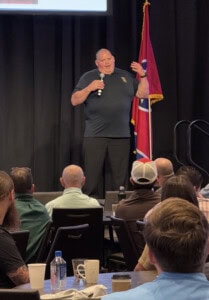
If you didn’t get to make it this year, plan now for 2026 as we will be visiting Milsoft’s home state in Austin, TX, June 16 – 18, 2026. See you there!

Milsoft Founder Honored with Prestigious

IEEE Award We are proud to announce that Milsoft founder and Chairman of the Board, Wayne Carr, has been named the recipient of the 2025 IEEE PES Award for Excellence in Power Distribution Engineering. This prestigious honor recognizes his groundbreaking contributions to electric power distribution that have improved reliability and sustainability across the industry. Selected through a highly competitive and rigorous process, Wayne’s work has had a lasting impact on how utilities approach distribution engineering challenges. His leadership and innovation have shaped industry practices and inspired the next generation of engineers. Upcoming Training Events in Dallas
Upcoming Training Events in Dallas

Dallas/Southlake Training Events DisSPatch/OMS August 5 – 7 (17 seats available) LightTable Coordination and Arc Flash August 12 – 14 (18 seats available) Milsoft Model Editing August 18 – 19 (12 seats available) WindMil Basic Analysis August 20 – 21 (11 seats available) WindMil Advanced August 26 – 28 (13 seats available) Regional Training Dates
Off the Clock: Wayne Carr 

I like to say I’m semi-retired—which means I work on what I want, when I want. It’s a blessing from God that, at 77, I can still stay connected to Milsoft, its people, and our customers. I especially enjoy reconnecting with longtime friends and meeting new ones at the Users Conference. My most important job is caring for Carol, my wonderful wife of 55 years. Her health challenges have slowed her down, and I’ve learned to help with laundry, make beds, and even cook a little—all of which I find surprisingly rewarding. I still love yard work—it keeps me active and feels like “real” exercise, unlike the gym. I also enjoy fishing, especially fly fishing in the mountains, though I’m happy casting a line anywhere. Time with our grandchildren is the greatest joy. Their games, performances, and celebrations remind me that grandchildren are truly one of life’s richest blessings.
10 Ways Customer Information Systems Benefit Utilities
According to research shared by Insight Software, “52 percent of organizations say they do not have a strategy for managing their data, which means they’re missing the ability to look at the bigger picture. The over-dependency on IT to generate reports and the inability to regularly add new sources of data and integrate non-financial information too often results in delays in the analysis and difficulty providing ad hoc reports.”
Those aren’t the only problems that companies in general — and utilities in particular — face. One of the most basic and vital data management tools is the customer information system (CIS). At its heart, CIS provides meter-to-cash (M2C) services, connecting specific customer accounts with amounts owed. But CIS serves as much more than just a cash register for utilities. Wondering what the benefits of information systems are? Read on to learn more about broader CIS benefits.
Operational Efficiencies
The importance of an information system in the daily life of a utility cannot be overstated, particularly since it directly translates customers’ utility usage into revenue. However, the role of these systems has greatly expanded beyond simple transactional functions, contributing significantly to increased operational efficiencies. Today’s Customer Information Systems (CIS) have evolved from basic billing tools to comprehensive operational platforms.
Recent advancements have seen many modern CIS systems integrate cutting-edge technologies such as Internet of Things (IoT) and machine learning. These technologies enable real-time data collection and analysis, enhancing the precision of service management and resource allocation. For instance, IoT devices can automatically transmit data about system usage and efficiency, allowing for proactive maintenance and faster response times to issues.
Moreover, CIS now often features advanced customer identifiers—think universal customer numbers—that seamlessly integrate individual accounts across all departments of a utility’s operations. This ensures that no matter the point of contact, every customer interaction is informed and personalized, significantly improving service delivery. The integration of customer data across platforms also facilitates the automatic generation of service orders, streamlining workflows.
This enhanced data integration enables utilities to accurately determine the specific equipment needs of customers, monitor the current status of onsite equipment, and efficiently coordinate activities related to inspection, installation, and repairs. Additionally, advancements in predictive analytics have allowed CIS to not only track but also anticipate customer needs, thereby scheduling and adjusting work orders preemptively to optimize operational efficiency.
Cost Reductions
If someone were to write advantages and disadvantage of information systems, you might expect one of the negatives to include an increased cost. After all, CIS doesn’t come free, and many utilities have continued to maintain antiquated systems because they seem to work just fine. But “just fine” may end up costing your utilities large amounts due to hidden inefficiencies. Consider that CIS can:
- Compile appropriate statistics related to accounts receivable, transaction histories, delinquent accounts, etc.
- Combat the “siloing” of applicable data by having it available via a single universal access point
- Aid in forecast generation through the automated creation of reports
When employees have to access or compile information by hand, they introduce the possibility of error. Additionally, the need to have eyes on certain aspects of the business that could be automated introduces ongoing expenses. And having employees focus on expanding the utility’s core business, implementing new projects, or reducing expenses is only possible when they aren’t preoccupied with more rote tasks.
Supply of Information to Decision Makers
The utility of Customer Information Systems (CIS) extends far beyond mere data management, especially as decision-makers benefit immensely from the automation of information. For instance, modern CIS platforms facilitate the implementation of flexible billing programs, which adapt in real-time to changes in usage patterns and pricing structures. This flexibility allows management to observe how shifts in billing parameters can benefit both the customer experience and the company’s bottom line.
A notable advancement in modern CIS is the integration of system-generated data with advanced customer engagement tools, such as real-time analytics and AI-driven insights. For example, when a customer raises a concern about a high bill, the system not only issues energy-efficiency tips but also uses predictive analytics to customize suggestions based on the customer’s specific usage patterns. This data-driven approach enables utilities to gauge the effectiveness of their communications and fine-tune their strategies based on the adoption rates of these messages.
Better Customer Service
The integration of advanced data analytics and AI technologies in CIS has significantly improved the quality of customer service in the utility sector. These technologies ensure that customer service representatives have instant access to a comprehensive record of each customer’s interactions, payment history, and service issues. This prevents the need for customers to repeat the same information during each interaction, thereby enhancing the customer experience.
Furthermore, modern CIS solutions feature advanced segmentation and data integration capabilities that prevent information from being siloed within different departments. They also include sophisticated escalation routines programmed to automatically forward issues to the appropriate personnel based on predefined criteria, such as the nature of the complaint or the customer’s history. This ensures that all customer issues are addressed promptly and efficiently.
By harnessing these technological advancements, CIS not only simplifies the management of customer data but also transforms it into actionable insights, enabling utilities to deliver exceptional service consistently. This approach not only meets current customer expectations but also adapts to future demands, setting new standards in customer engagement within the utility industry.
Growth in Communication Capabilities and Methods
A major part of any utility’s job is to manage meter-based tasks and the associated equipment needs. This gets complicated when one factors in customers’ payment histories and their unique geographies, which can put strain on operations. Improving communications across the utility can help alleviate those troubles.
How? In addition to determining customers’ payment status, a CIS can also sort tasks according to times of necessary completion (i.e., when one thing must be done prior to another), link service orders to specific accounts and specific contingencies, and automatically schedule service calls. What’s more, many CIS allow end users to sort related information by various data segments. This turns CIS into an analytic tool rather than simply a payment processing and job batching tool.
Efficient Customer Information Gathering and Management
When either utility employees (or even customers themselves) have to enter in data, information gets missed. In fact, it’s incredibly easy not only to overlook helpful data, but also to fail to enter it into the system, to fail to analyze it in the light of other applicable data, and to introduce redundant data. The end result? Frustration and inefficiency on every end.
We have already touched upon many of the related advantages offered by how efficiently CIS can gather customer information, such as greater customer satisfaction, improved marketing efforts, and improved analytics. But another advantage of efficient information gathering includes the ability to outsource a CIS to a third party. How? When utilities attempt to maintain a legacy system, which often happens as a part of a desire to minimize costs, they end up hindering future upgrade efforts. Trying to integrate an outdated system with new technology is often impossible, incredibly difficult, or cost prohibitive.
Fortunately, managed CIS is efficient enough to serve as an effective, economical substitute. Not only is managed CIS incredibly efficient, but it’s also often far less expensive than having to rework an antiquated IT system from the ground up. Additionally, not every utility possesses the technical know-how to install a CIS. In such cases, the efficiencies offered by managed CIS will end up improving the utility’s managerial situation as a whole.
Supporting New Marketing Initiatives
With the integration of advanced analytics and AI, CIS now supports dynamic marketing initiatives more effectively. These systems can leverage consumer data to personalize marketing efforts, predict customer needs, and manage targeted campaigns that promote new and existing services. This ability allows utilities to engage customers at the right time with the right offers, enhancing customer satisfaction and increasing revenue.
Providing Flexible Billing of Services and Multiple Commodities
Modern CIS solutions offer utilities the flexibility to bill for multiple services and commodities on a single platform. This flexibility extends to variable pricing models, discounts, and bundled services, which can be customized to meet diverse customer needs. By simplifying the billing process, utilities can improve the customer experience, reduce administrative costs, and adapt quickly to changes in the market or regulatory environment.
Continuous Availability of Systems
The continuous availability of CIS is crucial for maintaining uninterrupted service and customer satisfaction. Today’s CIS solutions are designed with high availability and disaster recovery in mind. Redundant systems, cloud-based technologies, and real-time data replication ensure that critical customer and operational data is always accessible, even in the event of hardware failures or natural disasters. This resilience is essential for utilities to maintain trust and reliability among their customers.
Enhancing Regulatory Compliance and Reporting
In the utility sector, adhering to evolving regulatory requirements is not just about compliance but also about seizing opportunities to enhance efficiency and transparency. Modern Customer Information Systems (CIS) are equipped to help utilities manage regulatory reporting and compliance more effectively. These systems can automatically generate reports that meet regulatory standards, reducing the risk of non-compliance and the associated penalties.
Moreover, CIS can be configured to track changes in regulations and adjust billing or operational procedures accordingly. This proactive approach ensures that utilities can quickly adapt to new requirements without significant overhauls to their systems. By integrating compliance into the daily operations managed by CIS, utilities can also gain insights into operational impacts of regulatory changes, aiding in strategic planning and risk management.
Exploring the vast benefits of modern Customer Information Systems (CIS), it’s evident that Milsoft’s solutions are essential for transforming utility operations and enhancing customer interactions. Our advanced CIS technologies ensure seamless efficiency and superior service management.
Discover the advantages of partnering with Milsoft. Let us help you optimize your operations with solutions tailored to your needs. Contact us for a demo and see how our systems can drive your utility’s success both today and in the future.
Milsoft Current News January 2025 Edition
Stay informed with the Milsoft Current Newsletter
January 2025 | Milsoft News

In Memory of Bill Kersting 1936 – 2025
Honoring a Legacy: Bill Kersting’s Pioneering Contributions to Utility Engineering
At the beginning of Milsoft’s journey in 1989, I frequently heard about Professor Bill Kersting at New Mexico State University while demonstrating engineering software to engineers who were his former students. It quickly became evident that these graduates were more like disciples than mere students. They made it clear that if we did not adopt Bill’s methods for engineering analysis calculations, they would not consider our software accurate or valid.
In 1990 or 1991, we contacted Bill to explore the possibility of working with him and incorporating his methods. Bill graciously agreed to travel from Las Cruces, New Mexico, to Abilene, Texas, to meet with us. At the time, Bill and Howard Phillips were developing and selling a distribution engineering software package that competed with ours. Despite this, Bill was generous enough to offer expertise and assistance in defining and developing electrical distribution engineering software. From that point forward, we adopted the algorithms he developed and recommended.
Bill maintained a contract with Milsoft from the early 1990s until his recent passing. Whenever I reached out to Bill for algorithms to support advancements in WindMil, he would deliver them within weeks in a format that seamlessly integrated into our software. This collaboration proved immensely successful and eventually led to Bill using WindMil as the reference software for his textbook series, Distribution System Modeling and Analysis with MATLAB and WindMil. Today, this textbook is the most widely used of its kind in universities teaching power engineering.
In recent years, Bill co-authored the textbook with Dr. Robert Kerestes of the University of Pittsburgh. Our relationship with Bill has now extended to Dr. Kerestes and his students, who will strive to fill Bill’s role as Milsoft’s engineering domain experts. In 2009, Bill was honored as the first recipient of the A.P. Seethapathy Rural Electrification Excellence Award.
“Established in 2008, the IEEE PES IAS A.P. Seethapathy Rural Electrification Excellence Award recognizes exceptional power engineers who have worked, implemented, or innovated better and more affordable electrification technologies for the rural sector.”
(From the IEEE PES webpage)
I know of no other individual in the electrical distribution engineering community who has contributed as much or commanded as much respect as Professor Bill Kersting.
Wayne Carr, Chairman of the Board

Release of E&O 24.2
We have just completed the release of version 24.2 of our E&O solutions. This release contains several new features that we are excited to get to you. We have added the Azure online maps to Streaming Landbase to replace Bing. You can also connect to your own published tile base map URL now in Streaming Landbase. In WindMil, there is now a set of tools to store results sets, allowing you to load them into the model for comparison against the current run. In DisSPatch, outages can now automatically get the restoral time from the first AMI meter On time reported into the system and we have added an outage address field to outages to allow for an easier way to see a physical address of a reported outage. There are several other improvements and new features included in the release and you can view videos on those features for OMS and EA.

UC Call for Presentations
We are well on our way for planning for the 2025 Milsoft Users Conference, which will be held in Nashville, TN June 3-5. We are looking for customers to participate in the conference by presenting a topic of your choice as part of the program. Unique projects, how you use the software, internal training programs, IT Issues, are all very popular topics. Remember that Presenters at the conference receive 50% off their registration fee. Submit your ideas to brian.lassiter@milsoft.com

Welcome NISC Customers to the Milsoft Family
We want to take a moment and welcome the customers from NISC who have migrated over to Milsoft for direct EA support. NISC ended our 30+ year agreement to provide Milsoft EA software to NISC members at the end of 2024 and we look forward to serving you directly for years to come.
If you need help getting your Milsoft EA licensing going directly from Milsoft, please email sales@milsoft.com.

2025 Training Opportunities Published
We have published our regional training schedule for 2025. If you can’t make it to a regional class or have multiple people you would like to train at your company, don’t forget that our training team can come directly to you. Contact your regional account manager to discuss building a training program that is right for you.
Upcoming Events
TechAdvantage 2025:
Atlanta
March 10-12
Booth 1623
DistribuTech 2025:
Dallas
March 25-27
Booth 1340
DisSPatch/OMS
Feb 25, 2025 to Feb 27, 2025
Nashville, TN
LightTable Coordination and Arc Flash
Feb 18, 2025 to Feb 20, 2025
Nashville, TN
Milsoft Model Editing
Feb 10, 2025 to Feb 11, 2025
Nashville, TN
WindMil Advanced
Mar 04, 2025 to Mar 06, 2025
Nashville, TN
WindMil Basic Analysis
Feb 12, 2025 to Feb 13, 2025
Nashville, TN

Off the Clock: Brad Fuqua
Brad Fuqua has served in a variety of roles at Milsoft over the last 22 years. Starting in our marketing department, Brad found his calling once he moved into a more technical and customer facing role on the OMS Support team. After almost 12 years of serving our customers, Brad and his family relocated to Colorado where he used Milsoft’s solutions daily working for an electric cooperative. Brad rejoined the Milsoft team in 2022 as the Product Owner for OMS and GIS. As a lifelong Jeep enthusiast, when Brad isn’t busy wrangling software bugs and features, he enjoys working on and driving his 2006 Jeep Wrangler Unlimited. Brad and his wife, Summer, will celebrate their 25th anniversary in July. Their son, Ethan, graduated from high school last May and has enlisted to serve in the U.S. Air Force. Their daughter, Addie, is a sophomore at Wylie High School and plays alto sax in the Pure Gold band. Spending quality time with his family, cheering on his beloved Kentucky Wildcats basketball team, and singing and playing on the worship team at his church keeps Brad’s life full and fun when he’s off the clock.

Want to share an “Off the Clock” story with us?
We’d love to share it!
Send your story and picture to christy.fayard@milsoft.com
Powering Up and New Research & Education Partnership
The University of Pittsburgh Swanson School of Engineering and Milsoft Utility Solutions, Inc. have entered a research partnership to further pathways for software development, student engagement and recruitment. Milsoft, based in Abilene, TX, develops distribution circuit modeling software for more than 1,000 electric cooperative utilities, municipalities, consulting firms, and universities worldwide.
The agreement will contribute toward research collaborations; contributing new code to the Milsoft software; engaging graduate and PhD students and on varied projects; and building a recruitment pathway for Pitt students into Milsoft.
Robert Kerestes, assistant professor of electrical and computer engineering (ECE) at the Swanson School, explained that industry partnerships are a cornerstone of the school and department. “ECE has developed strong, iterative collaborations with corporate partners that both advance research and provide employment opportunities for our students,” he said.
“Through collaboration with the University of Pittsburgh’s Swanson School, we are proud to be at the forefront of cutting-edge research in the service of safe, efficient, and affordable public utilities and consumers’ access to power,” noted Adam Turner, Milsoft CEO of Business Operations and President of the Board. “This partnership joins the industry-leading expertise of our team with the top-tier excellence of Pitt’s academics and engineers.
“Together, we will further advance the engineering and operations of power grids and distribution with new innovations, not only addressing current challenges known to utilities but conceivably expanding the capabilities and utilization of software applications beyond for the greater good.”
“Since our program’s founding in 1893, our programs have really evolved with the electric power generation, transmission, and distribution industries and many of the dynamic fields that have emerged with new technologies,” Kerestes said. “We’re excited to begin this partnership and discover new opportunities that benefit Milsoft and Pitt.”
Using CIS Software to Build Customer Relationships
In any sort of business, relationships with customers don’t manage themselves. Even when it comes to organizations as large and complex as utilities, meeting customers at their point of need matters. Billing errors occur, payments don’t get made promptly, accounts need service adjustments, and physical assets require repair. If employees can’t connect a customer’s history with a current issue, frustration starts to rise, and the utility won’t be able to execute its core mission.
This is where CIS software — also known as customer information system software — comes into play. Correctly implemented, a CIS suite can lead to greater efficiencies, better operational outcomes, and more satisfied customers.
How to Use CIS to Improve Customer Relationships
Before we begin, we should define our terms, explaining what exactly CIS is. At its most basic level, CIS helps sort applicable utility information so that different departments can effectively interact with it. Examples of CIS functionality include:
- Reading of meter data
- Organization of service orders
- Communication of upcoming, due, and overdue accounts to appropriate departments
- Funneling of past-due account to collections
The purpose of this data is to address a vital role of any utility, namely converting utility usage into revenue. This is called meter-to-cash (M2C), and it’s a daily need that utilities must reliably execute with the greatest accuracy possible.
When any conversation about CIS occurs, people inevitably want to know about CRM vs CIS. Like CIS, customer relationship management (CRM) software seeks to incorporate large amounts of data into a coherent goal with the purpose of interacting with and understanding the needs of current, past, and future clients. However, CRM isn’t concerned first and foremost with billing. Instead, it seeks to monitor customers and help ensure that they receive the best service possible. As such, it is a more advanced system than CIS, and some providers (including Milsoft) incorporate elements of CRM into their CIS suites. Still, CIS is a more fundamental offering, one that must come before the implementation of CRM.
So how does CIS improve customer relationships? Is CIS marketing meaning a new frontier for how you interact with clients? Well, not so much. At its most basic, CIS helps utilities do the basics associated with knowing who is using utility capacity, how much capacity is being used, the amount owed to the utility, and whether or not that account is current. It fulfills the M2C function, helping utilities to accurately meter a broad variety of energy commodities, produce a bill that matches that metering, and make sure that these processes fit appropriately with these processes.
Some CIS systems also include different off-the-shelf integrations with customer data, integrations allowing utilities to better implement metering and payments. Depending on your specific platform, customer data may synchronize and engage with:
- Mobile and desktop customer-service portals
- Interactive voice response telephone systems
- Meter data management systems
- Outage management systems
- Traditional marketing and social media
- Geographic information system data
- Public affairs firms and consultants
- Third-party payment processes
While not all CIS systems can integrate with every foreseen function, even the simplest CIS system provides an invaluable service for utility employees and customers alike: It accurately compiles all of a customer’s account information into a single place, produces a bill that matches that information, and does so in a way that naturally integrates with the utility’s existing operations. This means that all parties will avoid confusion as to the state of the account, including any and all completed or missed payments.
For systems with CRM integration, utilities can realize greater efficiencies and minimize downtime, which rewards customers with lower bills and more reliable service. Advanced CIS also helps utilities increasingly achieve decarbonization, a boon since increasing numbers of customers value a reduced environmental footprint. Finally, an integrated CIS system allows utilities to introduce new products and services without also causing undue confusion and upsetting existing financial processes.
Why Should You Care About Customer Relationships?
To some, the idea of building a relationship with customers sounds almost silly, particularly when considered in a utility’s context. After all, no one looks to a utility for a friendship. Utilities exist simply to deliver power, water, gas, or some such similar product — right?
In some sense, that’s true. Unless your utility is in a deregulated market, you don’t have to worry much about competition, which means that your customer outreach efforts have less to do with customer acquisition and retention than other businesses. Still, that doesn’t mean that utilities should ignore their relationships with customers, because such connections can still reap benefits.
Writing at EnergyCentral.com, Chief Legislative & Regulatory Affairs Officer of the Sacramento Municipal Utility District Michael Gianuzio highlighted the customer relationship, noting, “Forces are at hand that are changing the focus of the electric utility business. National politics will ultimately force electric utilities to radically change how they produce power. … [Utilities must be] about changing electric consumers from passive ‘so what, the lights come on’ consumers to actively engaged customers who want to use energy wisely. Customer energy literacy, in a new customer paradigm, should be a top priority. … To survive and flourish, electric utilities must become ‘consumer coaches’ as well as power providers, and for some customers they must become like ‘personal trainers,’ motivating customers to pick and adhere to individualized energy plans and packages.”
Ensuring that customers make energy-conscious decisions is far from the only reason why utilities should care about customer relationships. Others include:
- Improved asset lifespans due to customer-driven interactions
- Better management of the power grid due to integration with customers’ productive assets (e.g., solar panels)
- Ease of regulatory compliance for emissions targets
- Education of customers regarding new services and money-saving programs
- Less downtime due to real-time reporting and integration with servicing centers
- Easier management thanks to access to applicable information
- Improved branding and marketing efforts
- Fewer delinquent accounts and fewer uncollectible accounts
- More applicable data for research and development efforts
In fact, these are only a few of the potential benefits for a robust CIS system. Given your specific company and competitive context, there’s no telling what you may see happen!
Getting Started with CIS For Your business
No matter the kind of utility you’re running, Milsoft has the CIS systems you need in order to succeed. In addition to offering a high degree of automation to error-prone tasks that can frustrate employees, our system features a self-service portal that allows customers to pay their bills anytime and anywhere. A truly real-time system, our browser-based CIS solution is easy to access and incredibly secure. Our encrypted VPN network discourages intrusion attempts, ensuring that your authorized users are the only ones able to access it.
Additionally, the Milsoft CIS suite makes managing funds simple for utility employees as well as customers. Our back-end functionality includes payment processing and allows for both prepaid billing and net metering. And we can provide essential support if your IT department doesn’t want to handle routine tasks such as system security, maintenance, and upkeep. Our managed solutions are always safe and secure, and we submit ourselves to an annual System and Organization Controls (SOC) audit to ensure that our data centers meet industry standards. Contact us to get started today!
The True Cost of Using Old Tech [Software & Field Equipment]
Everyone understands that technology is advancing at breakneck speed, but sometimes it’s hard to quantify the rate of change. One way to measure technological advancement involves examining patent records, and when The Atlantic did so, it noted that “in the first decade of the patent office, the U.S. granted 229 patents—the same amount today’s America grants every 7.2 hours.” What’s more, consumers have come to expect that businesses will stay ahead of the technological curve. A survey conducted by Microsoft discovered that 80 percent of users will leave a website prior to making a purchase if it is out of date, and nearly two-thirds stated that they would be likely to repeatedly purchase from a technologically savvy business.
Of course, expecting technological advancement in a retail or corporate context is far different than when dealing with a utility company — right? After all, isn’t it true that utilities don’t need to be quite as technologically nimble as other organizations? Not at all. While it’s true that utilities often have a more secure customer base, the cost of using old technology impacts them just as much as any other business, if not more so. In this article, we will discuss the specific expenses incurred by the use of obsolete technology and the risk of using outdated technology.
The Main Costs Behind Outdated Technology
Businesses that don’t use technology in an effective or efficient manner rarely intend to fall behind the curve. Instead, they often get so caught up in their day-to-day affairs that they fail to notice how out of date their technology has become. For example, industry periodical Government Technology reported, “In April 2020, New Jersey’s governor, Phil Murphy, stepped up to a microphone and told journalists that he was amazed the state still ran its unemployment system on COBOL — a 60-year-old programming language. The state was having trouble keeping up with the massive surge of unemployment insurance applications coming in amid pandemic lockdowns, and it needed volunteers who knew that archaic language to use its own decrepit technology!”
The consequences of using COBOL was hardly a hidden cost of technology for the Garden State; its impact was obvious. But you may be surprised to learn what the cost of not upgrading software and hardware — especially when it comes to utilities.
Data Security
The Identity Theft Resource Center noted that there were 1,108 tracked U.S. data breaches in 2020, stating that “ransomware and phishing attacks directed at organizations are now the preferred data theft method by cyberthieves.” However, those aren’t the only tools that bad actors can aim at utilities. Using software that’s unapproved or no longer updated represents a substantial security risk. Security Intelligence reported that hackers used an employee-installed VPN to gain access to the networks of Colonial Pipeline Co. in 2021. This led to the company shutting down its operations, which prompted a region-wide energy crisis.
It’s tempting to think that such crises are isolated instances that your utility will never have to face. Sadly, though, security breaches in the utility sector are more common than you might think. A white paper published by information technology company Zones revealed that 73 percent of utility IT professionals have had to manage at least one security breach. Using outdated software greatly increases that risk.
Migration/Installation
Outdated technology can appear to work just fine — at least until the time to change it arrives. Virtually all utilities will reach a point where they need to introduce new systems or try to migrate old services or data to a different platform. That’s the point at which the real cost of old software and old computers still in use become apparent.
Sometimes new tech or new software won’t talk to the old equipment. Sometimes migration may require the introduction of a third-party bridging solution or manual re-entering of information or costly specialized technical support. (See the “Cost of Support” section below.) All of these difficulties can be easily avoided with a little forward focus and willingness to invest in staying technologically current.
Data Loss
Sometimes, utilities lose data due to old technology because they simply can’t collect it in the first place. The Santa Fe New Mexican reported that the Public Service Company of New Mexico ran into trouble in its campaign to replace burnt-out lights simply because it couldn’t identify them. “Until the city and PNM complete the sweeping streetlight conversion project, the utility company has no way to know if streetlights are out unless residents report them, PNM spokesman Raymond Sandoval said.”
Other times, data can simply disappear. Antiquated storage methods can cause data corruption, also known as bit rot or data rot. If that information isn’t supported by redundant systems, it’s gone forever.
Team Efficacy
When systems fail to talk with one another, collaboration suffers. Too often, information gets siloed into spreadsheets or has to be manually transmitted from one utility department to another. This means that teams have to work much harder just to connect with one another and do ordinary work — if they attempt to work together at all.
Cost of Support
In his 1987 science fiction novel Count Zero, William Gibson wrote about an online-savvy conman dubbed The Wig who realized one day that “silicon doesn’t wear out; microchips were effectively immortal. The Wig took notice of the fact. Like every other child of his age, however, he knew that silicon became obsolete, which was worse than wearing out.” Indeed, obsolescence can prove worse than breakage and not just because it allows ne’er-do-wells like The Wig to commit cybertheft.
The cost of support for such outmoded equipment may not seem as sinister as online crime, but it can be just as expensive. Companies can’t afford to support older products forever, and when troubles arise with them (as they inevitably will), the price tag for someone who can deal with them will inevitably be high.
Productivity Takes a Big Hit
Old tech invariably leads to delays, frustration, and general inefficiency. We’ve discussed at some length how utility companies must endure the expense of antiquated software and hardware. However, it’s employees who must interact with it on a daily basis, and that can cause serious morale problems. In some instances, a refusal to transition to more up-to-date solutions can even increase employee turnover.
You’ll Lose Customers to the Competition
Utility deregulation is a reality only in a minority of markets. However, in those spaces where private companies supply utility services, falling behind on the technological front can spell doom. Customers don’t want to stick around when they’re being serviced by lackluster tech.
Calculating the Risk of Running Old Software and Technology
How much of a risk does running old software pose to your utility? While that’s a difficult question to answer, we think we have a few quantifiable sums that you can measure against the cost of new technology. They include the following:
- CNBC reports that cyberattacks now cost companies $200,000 on average.
- HR consulting firm Robert Half reports that “professionals waste 22 minutes each day, on average, dealing with IT-related issues.” (Increase that number for antiquated technology and then compare it to employees’ salaries to get a better handle on the expense.)
- PricewaterhouseCoopers reports that “73 percent of people surveyed say they know of systems that would help them produce higher quality work,” and SHRM reports that the average cost per hire of a new employee is $4,425.
- Technology consultant Orion notes that the cost of keeping an outdated Windows Server 2003 running annually is $200,000.
Is the Cost of Running Old Software Worth It?
A simple consideration of the numbers in the previous section will lead you to an unavoidable conclusion: Continuing to use old technology simply isn’t worth it. This goes double for utilities, an industry where complexity meets governmental regulation and a need for efficiency. If your utility still relies on old legacy software suites, consider upgrading to a Milsoft solution. We provide top of the line software for engineering and operations, enterprise accounting and utility billing, and interactive voice response communications. Reach out today to learn more.
IVR Systems: 6 Mistakes you Want to Avoid
Interactive Voice Response Systems (IVR), otherwise regarded as Auto-Attendants, are systems designed to automate call processes. They help alleviate many of the burdens faced by both callers and receivers. However, if not appropriately incorporated into business operations, they may frustrate your customers, leave issues unresolved, and cause your business’ reputation to suffer.
Whether you’re proving your customers with the ability to pay their bills over the phone, or you need to handle the onslaught of inquiries during a power outage – having an Interactive Voice Response (IVR) system is integral to keeping things running smoothly.
There are numerous IVR solutions presently, making it relatively complicated for businesses to set up. Such complications may cause businesses to make certain mistakes that might make IVR systems less ideal for use. These mistakes can be problematic, often confusing or frustrating your customers. In the long run, repeated issues may affect your business’s reputation and cause you to lose loyal customers.
In this article, we have outlined common mistakes that companies make while implementing their IVR solutions. Being aware of these potential mistakes and how they can be avoided and/or rectified will help you avoid headaches and maintain a positive customer experience.
Offering Too Many or Irrelevant Options
Undoubtedly, it is essential to offer as many options as possible to your callers when designing an IVR solution for your business. However, there is a fine line between offering a variety of options and overwhelming your callers with excessive, superfluous, or even redundant options. Many business owners often find themselves caught in this trap.
Often, too many questions will confuse your callers, making them select the wrong option, thereby defeating the purpose of the IVR automated system. It’s also an easy way to frustrate customers seeking answers to certain questions about your service usage.
Hence, when setting your IVR system, ensure you arrange the menu options succinctly and appropriately. This way, it is easier for you to meet your customers’ needs as easily and quickly as possible.
Making Prompts Too Long or Complicated
Generally speaking, no one will call your business for fun. Typically, it is always to make further inquiries, provide feedback, or report an issue. All of which are time oriented. Therefore, you must ensure you can attend to your customers in real-time when setting up your IVR system. Your customers must be able to get assistance as quickly as possible, regardless of their issue or concern.
Hence, when designing an IVR system for your business, ensure your prompts aren’t too lengthy, complicated, or vague. Make them as precise as possible to avoid confusion and help serve your customers in a timely manner. Excessively long prompts may cause your customers to:
- Forget all available options
- Lose attention/zone out
- Select incorrect options, causing them to start all over again
No Call-back Option or Follow-up Surveys
Of course, IVR systems can’t always solve every possible query. So, what happens in that scenario? Does your customer leave without solutions to their issues? Do they have to call again after a specified period? Customers should always have the option to get a call-back. Perhaps they’ve exhausted the available options and need to speak with a live representative. Or maybe something came up, and they’re unable to sit on hold for 45 minutes. In these situations, providing your customers with the option to receive a call-back will greatly enhance customer satisfaction.
Additionally, not providing follow-up surveys is a frequent mistake several businesses make. Feedback is incredibly important in measuring your customers’ satisfaction. It’s also invaluable to helping tailor your processes for the best experience and results. Ask your callers if they are interested in offering feedback before sending them your survey/feedback form. Chances are, if you ask ahead of time, you’re more likely to receive completed surveys instead of blindly sending them and hoping for responses.
Talking with a Person is Too Difficult
Inevitably, a caller may need to bypass your IVR system and speak with an actual representative. The big question is, how quickly and easily can this be done? The sole purpose of an IVR system is defeated if your customers find it difficult to solve their problem without needing to speak with a real person. While the automated, self-serve options are sufficient in most cases, sometimes, they can be wholly unhelpful. This is particularly true when your customer has certain complex queries or needs to report relatively personal issues with your service. Your menu should always provide a clear path to speak with a live representative.
Poor Quality or Inconsistent Voice Recordings
Another problem you must avoid when setting up your IVR system is the temptation to record your IVR menu options in-house. While making your recordings in-house tends to be the cheapest option, it can come with its own set of problems.
Poor quality or inconsistent voice recordings may confuse your callers, making it hard for them to understand what your menu options convey. This may lead to frustration, anger, and an inability to resolve their issue. Obviously, you don’t want this to occur. Therefore, ensure your callers can easily understand your options by using professionally recorded instructions and prompts that are neither too slow nor too fast. High-quality voice recordings that seamlessly integrate formality and friendliness in their tones have proven to be the best. Avoid inconsistencies with the voice used and the volume of the recording. Otherwise, you might be intentionally setting your callers up for distraction and confusion.
Using Jarring Hold Music or Volumes
No one likes to wait, especially within a phone queue. However, sometimes lengthy wait times are inevitable, especially when you have a large customer base. Another mistake you should avoid is making your callers’ queue experiences worse by using jarring hold music or repetitive and aggressive sales pitches. While sales-through-service can be a great marketing tactic, repeatedly playing marketing messages about your latest products/services when a customer calls to report a malfunction might not always be wise. Loud and/or inconsistent volume is also a common complaint from customers stuck on hold.
Therefore, prioritize moderation. Cheery, inoffensive music at a reasonable volume is recommended and in certain instances may even make customers forget how long they’ve been on hold.
Outage Management Integration
While most people probably associate IVR systems with automated customer service, bill payment and the like, these systems are also able to seamlessly integrate with Outage Management Systems (OMS). Milsoft’s Outage Management system allows utility customers to stay informed when there’s a local power outage.
The IVR system comes into play when a customer calls to report an outage. The geolocation of that caller is then recorded into the OMS software map which keeps track of all power outages in the area. If a transformer is out, Milsoft can pinpoint all the homes that are connected to that transformer and an automated call and email will be sent to all affected homes. This correspondence will include information such as where the outages are occurring, estimated times of restoration, and other outage-related information.
Customer engagement is the key to a solid relationship between the utility company and their customers. Factor is an alternative multi-media approach to facilitating two-way communication, and your communications tool kit is a huge success!
Milsoft Communications is designed to maximize customer engagement by delivering optimal and versatile communications tools. Contact our team of experts to learn more about IVR and how Milsoft can help you with its implementation.