Public utilities are being asked to plan around a grid edge that is much more active than it used to be. Rooftop solar, behind-the-meter (BTM) storage, electric vehicles, demand response programs, smart thermostats, commercial energy controls, and other distributed energy resources can all change how much power a customer needs from the grid and when they need it. A feeder may look stable from the substation, while behind-the-meter activity is quietly changing the load profile at the customer level.
Behind-the-meter software helps public utilities turn those grid-edge signals into usable operational insight. With stronger BTM management, utilities can improve grid stability, strengthen grid reliability, reduce peak demand forecasting errors, and make better decisions across engineering, operations, metering, and customer service. This article looks at how behind-the-meter software supports enhanced load forecasting, smart meter data monitoring, and faster targeted response.
Enhanced Load Forecasting
Accurate load forecasting has always been central to utility planning, but the inputs are changing. Behind-the-meter software improves energy forecasting by helping utilities connect metering, customer, operational, and distributed resource data. Instead of treating customer-side activity as noise in the forecast, the utility can begin to recognize patterns that affect feeder loading, transformer stress, peak demand, and restoration priorities.
In its 2024 Long-Term Reliability Assessment, NERC noted that changing electricity use patterns, load behavior, and distributed energy resource performance can affect the accuracy of operational load forecasts that grid operators rely on. That makes behind-the-meter visibility more than a planning convenience. It is becoming an important part of practical reliability work.
Smart Meter Data and Monitoring
Utility metering is one of the most important foundations for behind-the-meter visibility. Advanced meters can provide interval usage data that supports billing, planning, demand response, and operational analysis. In its Reports on Demand Response and Advanced Metering, the FERC notes that advanced meters generally measure and record usage data at least hourly and provide that data to the utility at least daily, with some systems supporting more frequent or two-way communication.
For public utilities, collecting more data only matters when teams can turn it into practical operating insight.
Behind-the-meter software can help utilities organize these signals so teams are not working from disconnected snapshots. When smart meter data, customer information, outage data, and distributed resource information are easier to interpret together, utilities can make more confident decisions about where demand is growing, where load is shifting, and where the system may be exposed during peak or abnormal conditions.
Reduced Forecasting Errors from Unmonitored Load
Unmonitored behind-the-meter activity can create forecasting gaps. A utility may know how much energy a customer consumed from the grid, but that does not always reveal what happened behind the meter.
This matters because grid planning often depends on understanding both what happened and why it happened. A lower-than-expected load might look like reduced demand, when it was actually the result of behind-the-meter storage discharging during a peak interval. A sudden increase later may reflect battery charging, EV charging, or customer equipment returning to normal operation after a demand response event.
Better BTM management reduces those blind spots. By improving visibility into behind-the-meter storage, customer-side generation, and flexible load programs, utilities can build forecasts that better reflect actual grid conditions, resulting in more accurate peak demand forecasting, better capacity planning, and stronger confidence in operational decisions.
Robust Integrations with Distributed Energy Resources
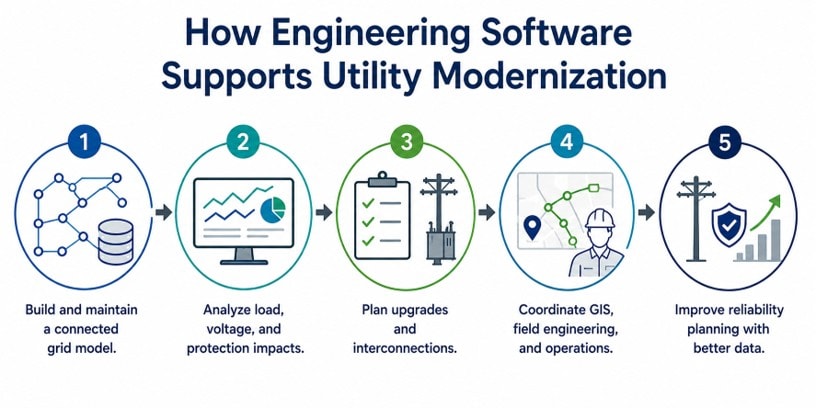
For public utilities, the practical question is how to integrate Distributed energy resources (DER) into planning and operations without creating data silos or adding unnecessary manual work. Behind-the-meter software can support this by connecting DER-related information with the systems utility teams already rely on. Depending on the utility’s environment and available integrations, this may include customer information systems, advanced metering infrastructure, outage management, GIS, engineering models, billing, and communications tools.
The DOE Office of Electricity has emphasized the role of demand flexibility and distribution resources in helping avoid increases in peak demand and improving the use of grid infrastructure. For utilities, that value depends on practical data coordination and reliable visibility across distributed resources.
U.S. Electricity Demand Growth, 1970–2035

U.S. electricity demand is projected to rise after years of relatively flat demand, driven by AI, data center expansion, electrification, and new domestic manufacturing. Source: U.S. Department of Energy, Office of Electricity, “Clean Energy Resources to Meet Data Center Electricity Demand.”
Accurate Tracking and Reporting for Informed Decisions
Behind-the-meter programs require clear tracking and reporting. Utilities need to know which customers are participating, what resources are installed, where those resources are located, how they perform, and how they affect load. Better reporting can support program evaluation, budget planning, infrastructure investment, reliability review, and customer communication.
EIA’s Form EIA-861 data collection includes areas such as advanced metering, demand response, distribution systems, dynamic pricing, energy efficiency, and net metering. The demand response data includes enrolled customers, energy savings, peak savings, and associated costs, while net metering data includes installation count, capacity, and related details by technology where available.
That kind of information matters because behind-the-meter activity increasingly affects both operational and financial planning. When utilities can report on BTM resources with more accuracy, they are better positioned to make informed decisions about programs, rates, infrastructure, staffing, and customer engagement.
Insights for Grid Optimizations
Behind-the-meter software can help utilities identify where system improvements may have the greatest impact.
These insights can support a range of grid optimization decisions, including transformer loading reviews, feeder planning, voltage analysis, demand response targeting, customer program design, and infrastructure prioritization.
If a utility can see that a certain area repeatedly contributes to peak demand during summer afternoons, it may evaluate whether targeted demand response, rate design, customer education, storage programs, or infrastructure upgrades are the best fit. If behind-the-meter storage is already present in a service area, the utility may need better information about when those systems charge and discharge so forecasts reflect real operating conditions.
Better Cost Control
Forecasting errors and poor grid-edge visibility can increase costs.
Behind-the-meter software supports better cost control by improving planning confidence and reducing manual guesswork. Utilities can use improved data to evaluate whether demand response, distributed storage coordination, targeted customer communication, or infrastructure investment is the most practical path for a specific issue.
EIA’s Energy Storage for Electricity Generation resource notes that commercial and industrial customers may use on-site energy storage to reduce demand and demand charges, and that energy storage systems can participate in demand-side management programs. EIA also notes that some battery storage technologies can respond quickly to demand fluctuations and help maintain voltage and frequency characteristics within expected ranges.

Energy storage technologies can exist across the electric grid, including at homes, microgrids, and commercial or industrial facilities. Source: U.S. Energy Information Administration
For a utility, those customer-side decisions affect the system. Better BTM visibility helps utility teams understand when customer cost-control actions also create planning, reliability, or operational impacts.
Improved Grid Resilience with Real-Time Demand Response
The FERC defines demand response as changes in electric usage by demand-side resources in response to price signals or incentive payments designed to reduce use during high wholesale prices or when system reliability is at risk. For public utilities, real-time or near-real-time demand response visibility can support resilience during peak periods, extreme weather, equipment constraints, or localized system stress.
This is where customer service, communications, operations, and engineering workflows intersect. The utility needs accurate customer data, clear program records, reliable usage information, and the ability to communicate quickly. Behind-the-meter software can help make those workflows more coordinated, especially when paired with utility systems that already support outage management, customer information, IVR, GIS, and operational decision-making.
Targeted Responses and Improved Response Times
Behind-the-meter visibility can also improve response during outages and abnormal conditions. When utility teams have better insight into customer-side resources and usage patterns, they can make more informed restoration and communication decisions. A medical facility with behind-the-meter generation or storage may require a different communication approach than a standard residential account.
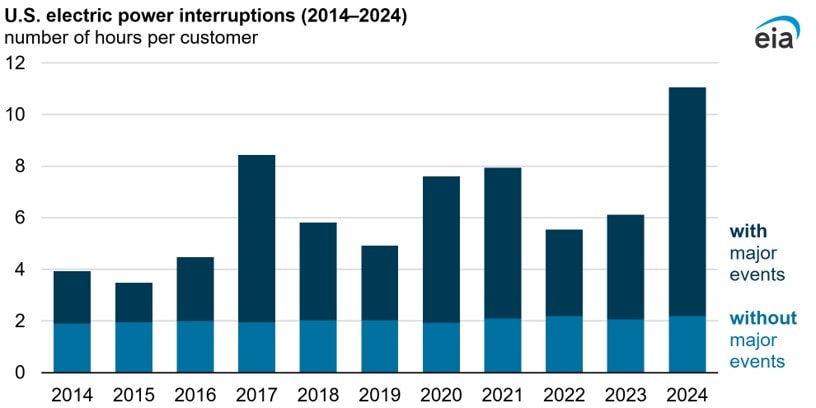
Reliability metrics show why this work matters. The EIA tracks metrics such as SAIDI, SAIFI, and CAIDI to assess customer interruption duration, interruption frequency, and restoration time. In 2024, EIA’s Table 11.1 Reliability Metrics of U.S. Distribution System reported U.S. distribution reliability metrics that included 662.6 minutes per year for SAIDI when major events were included and 131.6 minutes when major events were excluded.
Bringing Behind-the-Meter Visibility Into Utility Operations
Behind-the-meter software is most useful when it supports the daily work of utility teams. Better data helps engineers model the system more accurately, operators respond with more context, metering teams manage interval data more effectively, customer service teams answer questions with confidence, and leadership make better investment decisions.
For public utilities, BTM management is becoming part of the larger reliability conversation. As customer-side technology continues to grow, utilities need practical tools that connect usage, metering, outage, customer, DER, and communications data.
Milsoft Utility Solutions supports utilities with integrated software for engineering and operations, enterprise accounting and utility billing, and communications/IVR. To discuss how Milsoft can support your utility’s grid reliability, metering, operations, and customer communication goals, contact Milsoft to start a conversation.