Milsoft Utility Solutions, a leading provider of engineering, operations, and customer information software for the electric utility industry, announced that it will participate as an exhibitor at DTECH 2026, the premier transmission and distribution industry conference and tradeshow. Attendees can visit Milsoft at Booth #2346. Full Article »
Developing a Contingency Plan: How Software Can Help Utilities Prepare for Grid Failures
Even the most well-managed utility systems can face unexpected disruptions. From severe weather to cyberattacks and equipment failure, grid interruptions test a utility’s ability to respond quickly and maintain service reliability. The right software tools can transform how utilities anticipate, manage, and recover from grid failures.
Advanced outage management, simulation, and communication systems enable teams to identify vulnerabilities before they escalate, streamline response workflows, and coordinate field crews in real time. By integrating contingency planning with digital modeling, asset management, and data-driven forecasting, utilities can minimize downtime, protect infrastructure, and maintain customer confidence even under extreme conditions. Below, we’ll explore how technology-driven contingency planning strengthens resilience and ensures operational continuity when the unexpected occurs.
The Role of Software in Outage and Disruption Preparedness
In today’s energy landscape, software is not just a support tool; it is central to how utilities anticipate, manage, and recover from grid disruptions. Across the industry, companies are adopting analytics, artificial intelligence, and orchestration platforms to strengthen both resilience and responsiveness. For example, IBM’s Outage Prediction and Resource Optimization (OPRO) integrates historical outage data, weather forecasts, and infrastructure information to help utilities position crews before a storm arrives. AI-driven models can identify vulnerable feeders, prioritize maintenance, and simulate potential failure scenarios before they escalate.
Beyond prediction, modern outage management and workforce management systems streamline the process from detection to restoration. These platforms provide unified dashboards that combine real-time sensor data, operational telemetry, and GIS mapping to give operators a complete view of the grid. During active events, this visibility helps utilities isolate faults faster, dispatch crews more efficiently, and adjust restoration strategies as conditions evolve.
Software also plays a vital role in customer communication. AI-enabled engagement tools such as text alerts, chatbots, and online portals help keep customers informed throughout an outage, reducing confusion and minimizing call center volume. On the back end, post-event analytics feed valuable data into forecasting models to refine future contingency plans and improve system reliability over time.
In short, software serves as the operational backbone of grid preparedness, helping utilities monitor, diagnose, coordinate, and continuously improve their response to disruptions.
Using Software (and AI) to Develop a Contingency Plan
Modern contingency planning for utilities depends on data-driven insights and automated workflows. Software and AI now enable utilities to simulate complex outage scenarios, assess vulnerabilities, and coordinate faster, more effective responses.
From digital twins that map critical loads to predictive analytics that model cascading risks, technology gives teams the foresight to act before problems arise. Each component of the planning process, from communication protocols to compliance reporting, benefits from an integrated, software-enabled approach that replaces static manuals with dynamic, adaptable systems.
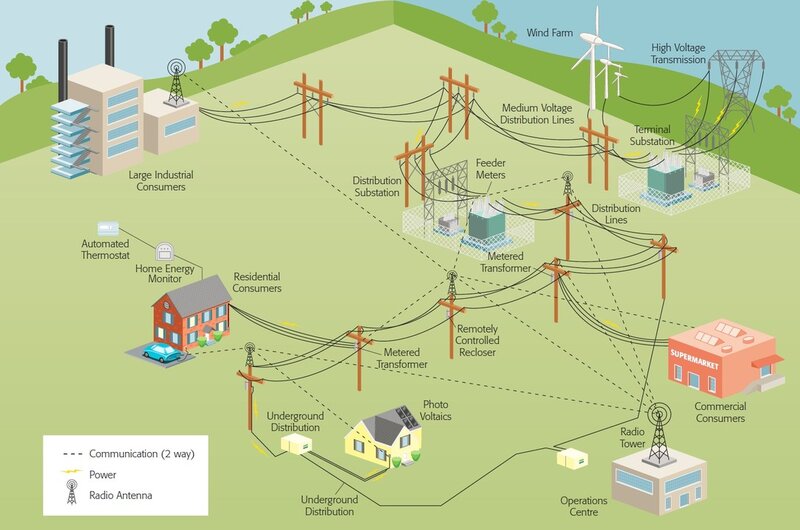
![]()
Example of power generation and distribution flow. Source
Mapping Critical Loads with Digital Twin Models
Digital twin technology creates a real-time, virtual replica of a utility’s grid infrastructure. These models allow planners to visualize power flows, asset conditions, and interdependencies across substations, feeders, and customer segments. By identifying which circuits support hospitals, emergency services, or water treatment facilities, utilities can prioritize critical loads during outages. Digital twins also make it easier to test “what if” scenarios and predict how system changes, such as adding renewable sources or new substations, might impact reliability before implementation.
Scenario Planning Through Risk Modeling Software
Contingency planning depends on understanding how various risks interact. Advanced modeling software uses weather forecasts, historical outage records, and equipment performance data to simulate likely failure scenarios. AI-enhanced tools can estimate outage duration, restoration costs, and cascading effects across interconnected systems. These insights help utilities allocate resources more effectively, pre-stage repair crews, and develop step-by-step response playbooks tailored to specific threat profiles such as hurricanes, wildfires, or cyberattacks.
Automating Communication and Coordination Protocols
During an outage, minutes matter. Software platforms designed for outage management can automatically trigger communication workflows that alert internal teams, contractors, and customers as soon as an event is detected. Automated updates reduce manual coordination errors and ensure that all stakeholders, from dispatchers to field technicians, operate from a shared, real-time information source. AI-powered chatbots and messaging tools can also manage customer inquiries, providing estimated restoration times and status updates without overloading call centers.
Optimizing Backup and Redundancy Strategies
Reliable contingency planning includes identifying and managing backup systems. Asset management software helps utilities inventory generators, transformers, and mobile substations while tracking their maintenance history and availability. AI-based optimization algorithms can determine the most effective way to deploy redundant assets, ensuring backup power is routed where it is most needed. By integrating asset data with demand forecasting, utilities can make data-informed decisions about where to invest in additional redundancy for maximum impact.
Running Virtual Drills and Stress Tests
Traditional tabletop exercises are valuable, but digital simulation software takes readiness to the next level. Utilities can run virtual drills that replicate large-scale failures, cyber incidents, or weather events to evaluate how their systems and teams perform under stress. These simulations highlight operational gaps, communication breakdowns, and recovery bottlenecks before a real event occurs. Continuous testing and refinement build institutional knowledge and make it easier for staff to respond confidently when disruptions strike.
Regulatory Compliance Tracking and Reporting
Regulatory requirements for reliability, safety, and emergency response are becoming increasingly complex. Software platforms now simplify compliance management by automatically tracking required documentation, deadlines, and audit trails. Built-in reporting tools generate standardized reports aligned with NERC, FERC, or state-level mandates, reducing administrative overhead and human error. With centralized data storage, utilities can demonstrate readiness and accountability to regulators while maintaining a clear record of all planning and response activities.
Identifying Points of Failure and Vulnerabilities
Every utility network contains weak links, whether in physical infrastructure, data systems, or operational processes. Identifying these points of failure early is key to preventing small issues from escalating into full-scale outages. Advanced analytics software allows utilities to monitor system health continuously, using data from sensors, smart meters, and substations to flag abnormalities.
Machine learning algorithms can detect early warning signs such as voltage fluctuations, transformer temperature spikes, or irregular power quality. By aggregating this information in a centralized dashboard, operators gain visibility into which assets or circuits present the highest risk of failure. Integration with asset management systems further enables maintenance teams to schedule preventive work before equipment fails. The result is a shift from reactive repairs to proactive risk mitigation, one supported by real-time data and predictive insights rather than routine inspection cycles alone.
Building a Smarter, More-informed Grid with AI
Artificial intelligence is transforming how utilities perceive and manage their grids. Instead of relying solely on static reports, AI systems can process vast streams of data to uncover patterns invisible to human analysis. This intelligence can improve fault detection, predict weather-related vulnerabilities, and even recommend optimized dispatch strategies for crews and resources.
Smart grid software equipped with AI capabilities also enhances situational awareness. It learns from previous disruptions, continuously refining predictive models to better anticipate similar conditions. For instance, if a region consistently experiences outages during specific weather events, the AI model can recommend targeted reinforcement or reconfiguration. Combined with cloud-based orchestration tools, this technology enables near real-time collaboration between control centers, field crews, and external partners. The outcome is a grid that not only reacts faster but also learns and evolves from every event.
Optimizing for Peak Demand and Blackouts in Real-time
During extreme weather or sudden surges in consumption, grid stability depends on the ability to balance load dynamically. Software designed for energy management and grid orchestration helps utilities forecast demand patterns, manage distributed generation, and prevent overloads. Real-time analytics combine historical data, weather models, and live usage information to forecast stress points before they cause blackouts.
When peak demand occurs, automation software can adjust voltage levels, reroute power, or bring backup assets online to stabilize the system. In regions with renewable integration, these tools can coordinate distributed energy resources such as batteries or microgrids to offset demand spikes. This not only reduces the risk of cascading failures but also improves efficiency and reduces operational costs. By continuously optimizing energy distribution, utilities can maintain reliability while supporting the growing complexity of modern power systems.
The Future of Grid Resilience and Contingency Planning
As grids grow more complex and the risks of disruption continue to evolve, utilities need more than traditional response plans, they need intelligent, adaptable systems that evolve with them. Software and AI give utilities the ability to anticipate problems, streamline recovery, and make data-driven decisions that strengthen long-term reliability. The future of grid resilience lies in preparedness powered by insight.
Milsoft Utility Solutions helps utilities achieve that preparedness through advanced engineering, analysis, and communication software designed specifically for the challenges of modern power systems. From outage management to contingency planning, Milsoft provides the tools and expertise to help utilities operate smarter and respond faster.
Maximizing Utility Efficiency: The ROI of Investing in Smart Software Solutions
Efficiency and cost control are top priorities for utilities as they navigate rising energy demand, regulatory pressure, and aging infrastructure. Full Article »
Using Software to Identify Weak Points in Your Grid Before a Crisis Hits
Electric grids face constant pressure from storms, aging infrastructure, cyber threats, and shifting demand. While utilities have always invested in reliability, today’s challenges require more proactive solutions. Software-driven grid analysis gives utilities the ability to spot vulnerabilities before they escalate into outages or costly failures. By leveraging data from across the distribution network, utilities can better prepare for disruptions and protect both their operations and customers.
Using software to identify weak points in the grid before a crisis hits means turning raw system data into actionable insights. Advanced platforms allow utilities to model system performance, run simulations, and detect areas most susceptible to overload, equipment failure, or cyber intrusion. This proactive approach provides decision-makers with clear visibility into where reinforcements, upgrades, or preventive maintenance will have the greatest impact. In short, grid analysis tools give utilities the ability to shift from reactive crisis response to predictive resilience planning, helping them keep the lights on, reduce risks, and maintain public trust.
![]()
Predict Failures Using AI and Analytics
Artificial intelligence (AI) and machine learning tools can scan massive volumes of grid data and detect patterns invisible to human operators. By analyzing historical outage records, weather conditions, equipment performance, and customer demand, predictive models flag components most likely to fail. Utilities can then prioritize maintenance before an issue escalates, reducing both downtime and repair costs. Analytics not only extend asset lifespans but also help utilities allocate resources more strategically. Over time, these systems learn from new data, making each prediction cycle more accurate and actionable.
Analyze Load Flow and Voltage Stability
Load flow analysis gives utilities critical insight into how power moves across their system. By studying current and projected demand, engineers can pinpoint where bottlenecks or imbalances could lead to instability. Voltage stability checks go hand in hand, ensuring that levels remain within safe operating ranges even under stress. Identifying weak points in advance prevents cascading failures, supports efficient upgrades, and ensures customers receive reliable service without interruption. Regularly running these studies helps utilities adapt to changing grid conditions and growth in demand, minimizing surprises.
Simulate Grid Behavior with Digital Twins
Digital twin technology creates a virtual replica of the utility’s grid. These models allow operators to experiment with different conditions, such as sudden demand spikes, equipment outages, or renewable integration, without real-world consequences. By simulating grid behavior, utilities can evaluate potential failure points, fine-tune operating strategies, and prepare for complex scenarios. Digital twins serve as a safe testing ground where vulnerabilities can be exposed and corrected long before they impact customers. They also provide a valuable tool for training staff, letting teams practice decisions in a risk-free environment.
Monitor Operations in Real Time with SCADA
Supervisory Control and Data Acquisition (SCADA) systems act as the real-time nervous system of the grid. They continuously monitor substations, switches, and distribution lines, alerting operators to abnormal conditions as they arise. SCADA data allows for immediate corrective action, minimizing the spread of outages and damage to infrastructure. When combined with predictive analytics, SCADA becomes even more powerful by enabling not just reaction but prevention. This real-time visibility builds confidence and helps utilities maintain reliability during unexpected events.
Scan for Cybersecurity Vulnerabilities
Modern grids are as digital as they are physical, making them attractive targets for cyberattacks. Weak points can include unsecured endpoints, outdated software, or poorly segmented networks. Proactive scanning tools identify these vulnerabilities before they can be exploited. The stakes are rising: U.S. utilities experienced a 70% surge in cyberattacks, according to Check Point Research, and NERC reported that grid software and hardware vulnerabilities now grow by about 60 new points each day. With regulatory pressure increasing around grid cybersecurity, utilities need continuous monitoring and patching strategies to defend against both state-sponsored threats and opportunistic intrusions. Investing in regular cyber audits reduces risk while reinforcing customer trust in the reliability of service.
Test DER and Microgrid Impacts on the Grid
Distributed Energy Resources (DERs) like rooftop solar, battery storage, and microgrids offer flexibility but can also introduce new challenges. Without proper planning, these assets may destabilize voltage or overload distribution circuits. Simulation tools allow utilities to evaluate the impact of DERs before integration, ensuring smooth coordination with the larger grid. Experts have cautioned that energy storage systems and DERs may be particularly vulnerable to cyberattacks because of their reliance on cloud-based software, making pre-integration testing all the more critical. By testing configurations virtually, operators avoid surprises when bringing new resources online. Proactively managing DER integration ensures that new technology strengthens resilience instead of creating new vulnerabilities.
Run Virtual Drills and Contingency Simulations
Unexpected crises, whether natural disasters, equipment malfunctions, or cyber events, require well-practiced responses. Virtual drills allow utilities to rehearse different contingency plans in a controlled environment. These exercises highlight weaknesses in both infrastructure and decision-making processes, giving utilities the chance to strengthen defenses. Practicing “what if” scenarios in advance builds confidence and shortens recovery time when a real crisis emerges. Utilities that engage in regular simulations are better positioned to restore service quickly and minimize disruption for customers.
Common Causes for Grid Vulnerabilities
Weak points in the grid can arise from many sources. Aging infrastructure is a leading factor, with equipment nearing the end of its service life. Increasingly severe weather events put additional strain on already fragile systems. Cybersecurity gaps continue to grow as grids become more connected. Rapid adoption of renewables and DERs, if not carefully managed, can add instability. And finally, human factors such as delayed maintenance or inadequate planning often amplify risks that could have been mitigated. Understanding these causes gives utilities a roadmap for prioritizing improvements and investments.
Why Proactive Grid Weak Point Detection Matters
Every outage carries costs: lost revenue, reputational damage, and reduced public trust. By identifying vulnerabilities before they escalate, utilities can prevent cascading failures, improve resilience, and strengthen compliance with regulatory requirements. Proactive detection turns uncertainty into insight, giving utilities the chance to act strategically rather than reactively. It also provides a more efficient use of capital by targeting the areas most at risk instead of spreading resources too thin.
Milsoft Utility Solutions provides utilities with the software tools needed to model, monitor, and manage these risks. From load flow analysis to real-time SCADA integration, our solutions empower utilities to spot weak points and take action before a crisis hits. To learn how Milsoft can help your utility build a smarter, more resilient grid, contact us today.
Improving SAIFI & SAIDI Scores: How Software Enhances Grid Reliability
As electric utilities face increasing pressure to maintain reliable service in the face of aging infrastructure, extreme weather, and growing demand, reliability metrics like SAIFI (System Average Interruption Frequency Index) and SAIDI (System Average Interruption Duration Index) have become critical indicators of performance.
Utilities are not only judged by these numbers—they’re financially impacted by them, especially in regulatory environments where penalties or incentives are tied to reliability. Improving these scores requires more than reactive fixes; it calls for smarter system planning, real-time visibility, and advanced analytics—all of which engineering software is uniquely positioned to provide.
![]()
When paired with outage management systems and GIS integration, engineering software creates a powerful feedback loop: historical outage data informs future system improvements, while real-time diagnostics accelerate restoration. This leads to a more resilient grid, fewer customer interruptions, and significantly improved SAIFI and SAIDI scores. We discuss below how you can integrate engineering software to improve your grid reliability.
Why Grid Reliability Matters and Needs to be Monitored
Reliable electric service isn’t just a customer expectation—it’s a critical necessity for homes, businesses, and public infrastructure. Power interruptions can disrupt daily life, halt business operations, and even threaten public safety, especially in sensitive environments like hospitals, data centers, and industrial facilities.
For utilities, poor reliability can damage reputation, erode customer trust, and trigger regulatory consequences. That’s why monitoring grid performance isn’t optional—it’s essential. By tracking reliability in real time and over the long term, utilities can better allocate resources, prioritize upgrades, and respond more effectively to emerging challenges such as extreme weather, distributed generation, and increasing load demands. Proactive monitoring lays the foundation for smarter decision-making and long-term system resilience.
Engineering software gives utilities the ability to model, analyze, and optimize their distribution systems with precision and speed that manual processes simply can’t match. By simulating load flow, identifying potential fault locations, and evaluating switching scenarios, these tools allow utilities to proactively address vulnerabilities before they lead to outages. Software-enabled grid simulations can also help determine the most effective locations for protective devices, capacitors, and reclosers—key components in minimizing the duration and frequency of service interruptions.
![]()
Key Metrics Used to Measure Grid Reliability
Utilities rely on several standardized indices to measure and benchmark system reliability, with SAIDI, SAIFI, and CAIDI being the most common:
- System Average Interruption Frequency Index (SAIFI) measures how frequently the typical customer has a power outage over a given period—typically one year. A lower SAIFI indicates fewer interruptions.
- System Average Interruption Duration Index (SAIDI) tracks the total duration of interruptions experienced by the average customer. Lower SAIDI values reflect faster outage response and restoration.
- Customer Average Interruption Duration Index (CAIDI) calculates the average time required to restore service to customers after an outage and is derived by dividing SAIDI by SAIFI.
These metrics help utilities identify patterns, compare performance against industry benchmarks, and prioritize infrastructure investments. They also play a central role in regulatory reporting and incentive structures, making them essential tools for accountability and operational improvement.
How to Improve SAIFI & SAIDI Scores with Engineering Software
Engineering software equips utilities with advanced tools to proactively enhance grid reliability by addressing the root causes of outages and streamlining restoration efforts. By integrating analytical capabilities into daily operations, utilities can transition from reactive responses to strategic system management, leading to measurable improvements in SAIFI and SAIDI scores.
- Conduct System Modeling & Load Flow Analysis: Advanced engineering analysis tools enable utilities to create precise models of their distribution networks, simulating power flows under various conditions. This allows for the identification of overloaded circuits, voltage imbalances, and potential failure points before they result in outages. For instance, utilities utilizing such modeling have reported significant reductions in outage frequency and duration, contributing to improved reliability metrics.
- Analyze Historical Outage Data: Integrating engineering models with historical outage data helps utilities uncover patterns and trends in system failures. By mapping outage frequency and duration to specific assets or geographic areas, utilities can prioritize upgrades and interventions where they will have the most significant impact on reliability. This data-driven approach has been instrumental in enhancing grid performance across various service territories.
- Use Data to Implement Predictive Maintenance: Predictive analytics powered by engineering software allow utilities to monitor equipment health in real-time and forecast potential failures. By addressing issues before they lead to outages, utilities can minimize both the frequency and duration of service interruptions. For example, United Power implemented a proactive maintenance strategy in 2017, which included analyzing data across thousands of miles of line to isolate underperforming segments. This approach led to a SAIFI score of 0.65 in 2023, indicating that the average customer experienced fewer than one outage throughout the year, and a SAIDI score consistently below 60 minutes—less than half the national average of approximately 120 minutes.
- Improve Fault Location, Isolation, and Service Restoration: Engineering software enhances fault location capabilities, significantly reducing the time required to identify and address issues on the grid. When combined with automated switching and remote monitoring, utilities can quickly isolate faults and restore power to unaffected areas. This rapid response not only improves customer satisfaction but also contributes to lower SAIDI and SAIFI scores.
- Optimize Team and Response Coordination: Integrating engineering software with outage management systems (OMS) and geographic information systems (GIS) facilitates seamless communication between control centers and field crews. This alignment ensures that response teams have access to accurate, real-time data, enabling faster and more efficient restorations. Utilities adopting such integrated systems have reported enhanced coordination and reduced outage durations.
- Simulate DER Integration and Microgrid Islanding: As distributed energy resources (DERs) and microgrids become more prevalent, engineering software can simulate their integration into the grid. Modeling microgrid islanding and DER responses to grid events helps ensure stability during disruptions, supporting localized reliability and minimizing broader service interruptions. This proactive planning is crucial for maintaining high reliability standards in modern, decentralized energy systems.
By leveraging these capabilities, utilities can shift from merely managing outages to preventing them, transforming complex data into strategic actions that strengthen the grid and enhance key reliability metrics.
Common Questions about Grid Reliability
What is a good SAIFI number?
A “good” SAIFI score typically reflects fewer interruptions per customer per year. While acceptable values can vary by region and utility size, a SAIFI below 1.0 is generally considered strong—meaning the average customer experiences fewer than one outage annually. Top-performing utilities, especially in suburban or urban areas with well-maintained infrastructure, may achieve SAIFI scores in the 0.5–0.8 range.
How are SAIDI and SAIFI calculated?
- SAIFI (System Average Interruption Frequency Index) is calculated by dividing the total number of customer interruptions by the total number of customers served:
- SAIDI (System Average Interruption Duration Index) is calculated by dividing the total duration of all customer interruptions by the total number of customers served:
These metrics help utilities track how often and how long customers are losing power, on average.
What is the difference between SAIFI and SAIDI?
While both are key reliability indicators, they measure different aspects of service interruptions:
- SAIFI focuses on frequency—how often the average customer experiences a power outage.
- SAIDI focuses on duration—how long the average customer is without power over a given time period.
Together, these metrics provide a more complete picture of utility reliability.
What are Major Event Days?
Major Event Days (MEDs) are days when extreme weather, natural disasters, or other large-scale disruptions cause unusually high levels of outages that fall outside of normal operating conditions. Because these events can significantly skew performance metrics, utilities often exclude MEDs when calculating standard SAIDI and SAIFI scores for regulatory or benchmarking purposes. The criteria for identifying MEDs are outlined by the IEEE 1366 standard.
Building a Smarter, More Reliable Grid
Improving SAIFI and SAIDI scores isn’t just about meeting benchmarks—it’s about delivering dependable service, gaining operational efficiency, and earning the trust of your customers. With increasing demands on the grid and tighter regulatory expectations, utilities need more than manual processes and best guesses. They need intelligent, integrated tools that bring clarity to complex systems and drive meaningful improvements.
Milsoft’s engineering analysis and outage management solutions are built to do exactly that. From predictive modeling and load flow analysis to fault isolation and DER simulation, our software helps utilities identify risks, streamline responses, and enhance reliability—backed by decades of real-world success.
Ready to take your reliability metrics to the next level? Contact Milsoft Utility Solutions today to learn how our platform can help you strengthen your grid and exceed your performance goals.
How Automation is Changing Utility Management
This post was updated March 27, 2025 to include new insights.
America’s security, economy, health, and safety all depend on the continuous delivery of electricity. Yet, our electric infrastructure is being pushed to operate more efficiently as it ages beyond its expected lifespan.
Modernizing the grid using smart grid technology and control software is one way to make our electric grid more resilient. These technologies work together to control the delivery of electricity reliably and efficiently throughout the system and to detect and reduce the impact of outages and problems.
What Power Grids Were Like before Smart Grid Technology
Without smart grid technology, the nation’s power grid is a series of connected networks that are inter-dependent. Failure in one part of the system can quickly lead to failures down the line which cascades into collapse.
A good example of this inter-dependency is the 2003 blackout that began in Ohio when a tree branch took out a transmission line. Over the course of an hour, a series of errors took out two more transmission lines which triggered a cascading failure. Approximately 50 million people from Michigan to New England and Canada lost power, according to the Daily News.
Without smart grid technology, power restoration moves more slowly as failure points must be located and repaired. In contrast, smart grid power management software allows problems and failures to be detected early or avoided completely. When problems do occur, power is rerouted, and assets and personnel are deployed quickly to prevent systemic failure and shorten downtimes.
How does a Smart Grid Work?
Using power management software, computer processing, advanced sensors, and two-way communication technologies, smart grid technologies map and monitor the power grid continuously. Built in relays sense faults in the substations and recover automatically. Automated switches re-route power to keep the system working.
Operators, using smart grid technology, monitor the entire power grid, quickly locating and repairing problems. They are able to access all needed information about the grid stability instantly from one location. Prior to smart grid technology, technicians had to check sensors and function at multiple sites along the grid.
How is Software Automation Affecting the Electrical Grid?
Software automation provides multiple layers of protection for power generation, distribution, and grid security. Power management software monitors and independently controls each section of the entire system. Problems or failures in one section of the grid can be isolated, protecting neighboring sections. If any part of the system is compromised, the threat is isolated and the system reroutes power along the grid to contain the problem.
Smart grid technologies also offers numerous additional benefits to power generation and distribution systems, including:
- Reducing frequency and duration of power outages
- Restoring services faster after an outage
- Potential for self-healing without human intervention
- Improved grid security and reduced vulnerability
- Allowing consumers access to usage data, better controlling consumption and costs
- Managing and reducing peak loads
- Rapid isolation of failures
- Preventing cascading failures by rerouting of power around the problem
- Increased integration of renewable energy sources
- Automated control of battery storage of power
- Reduced operational costs
- Improved fault detection
- More reliable electric supply
Why Do We Need Smart Grids?
As our electric grid ages, governments, regulators, and consumers are looking for ways to improve energy generation and delivery to homes and businesses. A smart grid is a comprehensive solution that helps reduce the waste of electricity and energy costs. This technology allows better control of energy delivery and management.
Smart grid technologies are essential to transitioning to renewable energy sources and balancing energy demand. Renewable energy sources like wind and solar power are variable, requiring energy management software that distributes energy efficiently and regulates energy storage for use during peak usage.
How Automation Benefits Utility Companies
Automation in utility management goes far beyond convenience—it is transforming how utilities operate at every level. From infrastructure monitoring to customer service, automation improves reliability, safety, and operational efficiency.
- Elimination of Manual Tasks: Traditional utility operations often rely on manual meter readings, field inspections, and paper-based records. Automation replaces these processes with digital monitoring, remote diagnostics, and smart meters. This not only saves time but also drastically reduces the potential for human error.
- Assured Cost-Savings and Efficiency: Automated systems optimize energy distribution by balancing loads and minimizing energy losses across the grid. By automating repetitive tasks and routine maintenance, utilities can reduce labor costs, lower operating expenses, and reallocate resources to high-priority projects.
- Analysis and Reporting: Automated software solutions collect and analyze vast amounts of data in real time. This enables utility companies to generate detailed reports on usage trends, system performance, and infrastructure health—helping them make more informed decisions without manual data crunching.
- Improve Energy Management: With real-time data collection and forecasting capabilities, automation supports smarter energy allocation and demand response. This is particularly valuable in managing peak loads and integrating variable renewable sources like wind and solar.
- Decision Making: Automation equips utility operators with actionable insights. From predictive maintenance alerts to load forecasting, automated tools support faster, more accurate decision-making that directly improves reliability and service continuity.
- Employee Safety: Automated fault detection and remote diagnostics reduce the need for field technicians to enter hazardous environments. This enhances worker safety by minimizing exposure to high-voltage areas, extreme weather, or emergency conditions.
- Better Service: Automation leads to fewer outages, quicker recovery times, and better communication with customers. By automating outage notifications and service updates, utilities can keep customers informed and reduce frustration during service interruptions.
- Shorten Your Utility Bill Cycles: Smart metering and automated billing systems streamline the billing process, enabling faster and more accurate invoicing. Customers benefit from clearer statements and timely billing, while utility companies improve cash flow and reduce administrative burdens.
- Return on Investment: While the initial cost of automation technology can be significant, the long-term return on investment is substantial. Lower maintenance costs, fewer outages, improved operational efficiency, and customer satisfaction all contribute to a strong business case for automation.
Artificial Intelligence in Energy and Utilities
Artificial Intelligence (AI) is rapidly becoming a foundational technology in the utilities sector, enhancing the capabilities of automation and delivering new levels of insight and adaptability. AI enables utilities to move from reactive operations to predictive and even prescriptive decision-making—transforming everything from grid performance to customer engagement.
- Predictive Maintenance: AI-driven analytics can identify patterns in equipment performance that signal impending failure. By predicting maintenance needs before breakdowns occur, utilities can avoid costly outages and extend the lifespan of critical assets such as transformers, substations, and circuit breakers.
- Grid Optimization: AI algorithms analyze real-time data to detect inefficiencies, balance loads, and optimize energy flow across the grid. This is especially valuable for integrating distributed energy resources (DERs), such as rooftop solar or wind farms, which require dynamic adjustments to maintain grid stability.
- Demand Forecasting: Accurate forecasting is critical for both energy generation and cost management. AI enhances forecasting models by incorporating historical usage data, weather patterns, and even real-time consumer behavior to better predict demand and align energy supply accordingly.
- Enhanced Cybersecurity: As power systems become more connected, they also become more vulnerable. AI is increasingly used to monitor networks for suspicious activity, detect anomalies, and respond to cybersecurity threats faster than human operators could.
- Intelligent Customer Engagement: AI-powered chatbots and virtual assistants are helping utilities provide 24/7 customer service, answering billing questions, outage updates, and account support. AI can also personalize communications, helping customers better understand their energy usage and how to reduce costs.
- Renewable Energy Integration: AI helps manage the variable nature of renewable energy sources by predicting generation levels and adjusting grid operations in real time. This supports greater reliance on clean energy without compromising reliability.
What does the Future of Utility Management Look Like?
The utilities industry is evolving rapidly. Rising costs, changing load patterns, and new smart grid technologies are driving innovation toward a bright future.
Additionally, regulatory changes and renewed interest in green energy sources is moving the industry in new directions:
- Decarbonization – Cleaner, emission-free electricity sources such as wind and power are growing
- Decentralization – The power grid continues to decentralize with more reliance on localized power generation and battery storage rise.
- Electrification – As electrical power increasingly comes from wind and solar, electrification is increasing in every area of technology, including transportation, heating, and industrial use.
As power companies face new challenges and expectations, disruptive forces are impacting the industry, forcing energy consumers and providers to react to changing market conditions. These disruptive forces fall into four main categories, according to a recent article by Deloitte.
- New digital technologies are creating new opportunities for new products and services
- New performance challenges and expectations
- New energy technologies
- New practices and business models
Smart grid technology and utility management software will allow the collection of real-time information data on electricity generation, transmission, distribution, and consumption. Real-time data allows utility providers to make better decisions in balancing resources and forecasting production costs and demand. Over the next decade, technologies and applications will continue to evolve, increasing flexibility, changing business models and how data is collected.
10 Ways Customer Information Systems Benefit Utilities
According to research shared by Insight Software, “52 percent of organizations say they do not have a strategy for managing their data, which means they’re missing the ability to look at the bigger picture. The over-dependency on IT to generate reports and the inability to regularly add new sources of data and integrate non-financial information too often results in delays in the analysis and difficulty providing ad hoc reports.”
Those aren’t the only problems that companies in general — and utilities in particular — face. One of the most basic and vital data management tools is the customer information system (CIS). At its heart, CIS provides meter-to-cash (M2C) services, connecting specific customer accounts with amounts owed. But CIS serves as much more than just a cash register for utilities. Wondering what the benefits of information systems are? Read on to learn more about broader CIS benefits.
![]()
Operational Efficiencies
The importance of an information system in the daily life of a utility cannot be overstated, particularly since it directly translates customers’ utility usage into revenue. However, the role of these systems has greatly expanded beyond simple transactional functions, contributing significantly to increased operational efficiencies. Today’s Customer Information Systems (CIS) have evolved from basic billing tools to comprehensive operational platforms.
Recent advancements have seen many modern CIS systems integrate cutting-edge technologies such as Internet of Things (IoT) and machine learning. These technologies enable real-time data collection and analysis, enhancing the precision of service management and resource allocation. For instance, IoT devices can automatically transmit data about system usage and efficiency, allowing for proactive maintenance and faster response times to issues.
Moreover, CIS now often features advanced customer identifiers—think universal customer numbers—that seamlessly integrate individual accounts across all departments of a utility’s operations. This ensures that no matter the point of contact, every customer interaction is informed and personalized, significantly improving service delivery. The integration of customer data across platforms also facilitates the automatic generation of service orders, streamlining workflows.
This enhanced data integration enables utilities to accurately determine the specific equipment needs of customers, monitor the current status of onsite equipment, and efficiently coordinate activities related to inspection, installation, and repairs. Additionally, advancements in predictive analytics have allowed CIS to not only track but also anticipate customer needs, thereby scheduling and adjusting work orders preemptively to optimize operational efficiency.
Cost Reductions
If someone were to write advantages and disadvantage of information systems, you might expect one of the negatives to include an increased cost. After all, CIS doesn’t come free, and many utilities have continued to maintain antiquated systems because they seem to work just fine. But “just fine” may end up costing your utilities large amounts due to hidden inefficiencies. Consider that CIS can:
- Compile appropriate statistics related to accounts receivable, transaction histories, delinquent accounts, etc.
- Combat the “siloing” of applicable data by having it available via a single universal access point
- Aid in forecast generation through the automated creation of reports
When employees have to access or compile information by hand, they introduce the possibility of error. Additionally, the need to have eyes on certain aspects of the business that could be automated introduces ongoing expenses. And having employees focus on expanding the utility’s core business, implementing new projects, or reducing expenses is only possible when they aren’t preoccupied with more rote tasks.
Supply of Information to Decision Makers
The utility of Customer Information Systems (CIS) extends far beyond mere data management, especially as decision-makers benefit immensely from the automation of information. For instance, modern CIS platforms facilitate the implementation of flexible billing programs, which adapt in real-time to changes in usage patterns and pricing structures. This flexibility allows management to observe how shifts in billing parameters can benefit both the customer experience and the company’s bottom line.
A notable advancement in modern CIS is the integration of system-generated data with advanced customer engagement tools, such as real-time analytics and AI-driven insights. For example, when a customer raises a concern about a high bill, the system not only issues energy-efficiency tips but also uses predictive analytics to customize suggestions based on the customer’s specific usage patterns. This data-driven approach enables utilities to gauge the effectiveness of their communications and fine-tune their strategies based on the adoption rates of these messages.
Better Customer Service
The integration of advanced data analytics and AI technologies in CIS has significantly improved the quality of customer service in the utility sector. These technologies ensure that customer service representatives have instant access to a comprehensive record of each customer’s interactions, payment history, and service issues. This prevents the need for customers to repeat the same information during each interaction, thereby enhancing the customer experience.
Furthermore, modern CIS solutions feature advanced segmentation and data integration capabilities that prevent information from being siloed within different departments. They also include sophisticated escalation routines programmed to automatically forward issues to the appropriate personnel based on predefined criteria, such as the nature of the complaint or the customer’s history. This ensures that all customer issues are addressed promptly and efficiently.
By harnessing these technological advancements, CIS not only simplifies the management of customer data but also transforms it into actionable insights, enabling utilities to deliver exceptional service consistently. This approach not only meets current customer expectations but also adapts to future demands, setting new standards in customer engagement within the utility industry.
Growth in Communication Capabilities and Methods
A major part of any utility’s job is to manage meter-based tasks and the associated equipment needs. This gets complicated when one factors in customers’ payment histories and their unique geographies, which can put strain on operations. Improving communications across the utility can help alleviate those troubles.
How? In addition to determining customers’ payment status, a CIS can also sort tasks according to times of necessary completion (i.e., when one thing must be done prior to another), link service orders to specific accounts and specific contingencies, and automatically schedule service calls. What’s more, many CIS allow end users to sort related information by various data segments. This turns CIS into an analytic tool rather than simply a payment processing and job batching tool.
Efficient Customer Information Gathering and Management
When either utility employees (or even customers themselves) have to enter in data, information gets missed. In fact, it’s incredibly easy not only to overlook helpful data, but also to fail to enter it into the system, to fail to analyze it in the light of other applicable data, and to introduce redundant data. The end result? Frustration and inefficiency on every end.
We have already touched upon many of the related advantages offered by how efficiently CIS can gather customer information, such as greater customer satisfaction, improved marketing efforts, and improved analytics. But another advantage of efficient information gathering includes the ability to outsource a CIS to a third party. How? When utilities attempt to maintain a legacy system, which often happens as a part of a desire to minimize costs, they end up hindering future upgrade efforts. Trying to integrate an outdated system with new technology is often impossible, incredibly difficult, or cost prohibitive.
Fortunately, managed CIS is efficient enough to serve as an effective, economical substitute. Not only is managed CIS incredibly efficient, but it’s also often far less expensive than having to rework an antiquated IT system from the ground up. Additionally, not every utility possesses the technical know-how to install a CIS. In such cases, the efficiencies offered by managed CIS will end up improving the utility’s managerial situation as a whole.
Supporting New Marketing Initiatives
With the integration of advanced analytics and AI, CIS now supports dynamic marketing initiatives more effectively. These systems can leverage consumer data to personalize marketing efforts, predict customer needs, and manage targeted campaigns that promote new and existing services. This ability allows utilities to engage customers at the right time with the right offers, enhancing customer satisfaction and increasing revenue.
Providing Flexible Billing of Services and Multiple Commodities
Modern CIS solutions offer utilities the flexibility to bill for multiple services and commodities on a single platform. This flexibility extends to variable pricing models, discounts, and bundled services, which can be customized to meet diverse customer needs. By simplifying the billing process, utilities can improve the customer experience, reduce administrative costs, and adapt quickly to changes in the market or regulatory environment.
Continuous Availability of Systems
The continuous availability of CIS is crucial for maintaining uninterrupted service and customer satisfaction. Today’s CIS solutions are designed with high availability and disaster recovery in mind. Redundant systems, cloud-based technologies, and real-time data replication ensure that critical customer and operational data is always accessible, even in the event of hardware failures or natural disasters. This resilience is essential for utilities to maintain trust and reliability among their customers.
Enhancing Regulatory Compliance and Reporting
In the utility sector, adhering to evolving regulatory requirements is not just about compliance but also about seizing opportunities to enhance efficiency and transparency. Modern Customer Information Systems (CIS) are equipped to help utilities manage regulatory reporting and compliance more effectively. These systems can automatically generate reports that meet regulatory standards, reducing the risk of non-compliance and the associated penalties.
Moreover, CIS can be configured to track changes in regulations and adjust billing or operational procedures accordingly. This proactive approach ensures that utilities can quickly adapt to new requirements without significant overhauls to their systems. By integrating compliance into the daily operations managed by CIS, utilities can also gain insights into operational impacts of regulatory changes, aiding in strategic planning and risk management.
Exploring the vast benefits of modern Customer Information Systems (CIS), it’s evident that Milsoft’s solutions are essential for transforming utility operations and enhancing customer interactions. Our advanced CIS technologies ensure seamless efficiency and superior service management.
Discover the advantages of partnering with Milsoft. Let us help you optimize your operations with solutions tailored to your needs. Contact us for a demo and see how our systems can drive your utility’s success both today and in the future.
How Utilities can Grow with Declining Energy Consumption
Energy is a major component of the United States’ economy. According to the University of Michigan Center for Sustainable Studies, “the U.S. spent $1.2 trillion on energy, or 5.7% of Gross Domestic Product (GDP)” in 2019. While that’s no small amount of what the U.S. produces, the somewhat surprising news is that energy consumption is projected to decline in the coming decades. By 2050, energy per capita is expected to decline below 300 million BTUs per capita, a dip beneath current usage statistics. The U.S. Energy Information Administration attributes this demand to increasing energy efficiency, stating, “U.S. energy consumption grows at a slower rate than gross domestic product through 2050 as U.S. energy efficiency continues to increase.”
This poses a challenge for public utilities. While energy efficiency is a stated policy goal, the achievement of it seems to shrink utilities’ revenue prospects. How can utilities continue to grow even as consumers and companies alike consume less energy? In this article, we will seek to answer that question.
Satisfying today’s energy consumer
It’s easy to see declining energy consumption as an inevitability, but a fatalistic attitude toward the changing competitive landscape obscures a key insight: Efficiency cuts both ways. It can cut a utility’s revenue if not carefully managed — and it can also grow it. How? Consider the following.
A standard unit of power measurement is a quad, which is defined as a quadrillion BTUs. Utilities can imagine what exactly a quad is by using a number of different practical measures, such as the fact that it equals 293,071,000,000 kilowatt-hours or 970,434,000,000 cubic feet of natural gas or 8,007,000,000 gallons of gasoline. Visual Capitalist notes, “A quad is a massive unit that only is useful in measuring something like national energy consumption.” What’s also noticeable is that “a whopping 68% of all energy is actually rejected energy, or energy that gets wasted through various inefficiencies.” And that statistic appears even more stark when broken down by sector. The residential sector only enjoys a 65 percent end-use efficiency with 3.75 quads of wasted energy, while the commercial sector also has a 65 percent end-use efficiency with 3.15 quads wasted.
Utilities often focus on the revenue lost due to greater energy efficiency, but increased efficiency represents an opportunity to please customers. Utilities don’t want to deliver power that isn’t used, and customers don’t want to pay for wasted energy. Utilities can help satisfy today’s energy customer by helping to educate them as to how they can save money by using energy more efficiently. They can also employ efficiency tools such as time-of-use billing, which allows utilities to leverage smart metering in order to set usage-adjusted rates. Added benefits such as discounted days and “free” off-peak periods help keep customers happy and leverage efficiencies to benefit utilities, decreasing expenses and increasing income.
Another way to please customers while helping utilities involves implementing prepaid billing. This option reduces expenses such as collections and many standard billing costs. Passing some of that savings on to customers benefits both parties.
Diversifying utility asset bases
Energy efficiency — meaning the maximally productive use of energy — isn’t the only way for utilities to reduce expenses. They can maximize income (and sometimes every realize strategic growth) by diversifying their utility asset bases.
Everyone is familiar with the four largest generators of American energy: petroleum, natural gas, coal, and nuclear. Much has been made about the death of coal, and natural gas has suffered more modest declines, while petroleum and nuclear energy have enjoyed only marginal increases. However, almost all of the smaller alternative energy sources have enjoyed healthy to dramatic growth. These include:
- Biomass
- Hydro
- Wind
- Solar
Only geothermal, which is the least used of all energy sources, saw a decline.
Distributing energy generation across multiple asset bases offers several growth opportunities for utilities. Naturally, these opportunities will vary from state to state since some states restrict utility asset ownership. However, in contexts where it is allowed, asset investment can lead to the development of a vertically integrated utility, which greatly reduces operating costs. States that have renewable energy targets may offer various kinds of incentives to encourage their development, including utility ownership of assets. These assets can include technologies that consumers would typically own, such as rooftop solar arrays, which can lead to rate recovery without a substantial capital investment.
Other benefits include:
- Diversifying the utility’s asset portfolio
- Decentralizing energy production, which protects against economic shocks
- Developing expertise in a new energy technology field
- Shoring up strategic vulnerabilities in an existing grid by introducing new technologies at key points
Value-added services
Value-added services are generally defined as optional utility services that a customer may elect for additional benefits, services whose costs are only borne by those specific individuals and not the entire customer base. Value-added services have a number of benefits over traditional utility services. They can use extant marketing channels, greatly reducing communication costs. The same holds true for IT resources and back-channel systems, which can engage with value-added services at minimal cost. Finally, utilities have a unique position to offer specialized value-added services such as electric vehicle charging stations, backup microgrids that can continue to function for specific customers during catastrophes or unexpected grid failure, and solar panels for rural areas.
These value-added services can expand in multiple ways, and two of the most promising are through online marketplaces and smart homes.
Online marketplaces
Web-based marketplaces such as Amazon, Yelp, and eBay achieve revenue growth not primarily through creating and selling their own products, but by connecting interested consumers with third-parties who have applicable goods. While not every online marketplace has proved successful in its mission, they have still led a retail revolution that has transformed what it means to buy and sell — and there’s no reason why utilities can’t join them.
Power-related products applicable to both residential and commercial clients abound. Everyone could benefit if utilities could connect customers with reputable third parties who offer goods that might benefit them. The challenge lies primarily in quality control and avoiding the impression of a conflict of interest on utilities’ parts.
Smart homes
Speaking of energy-related goods, utilities can also implement value-added services that related to the internet of things (IOT) offerings that increasingly appear in modern smart homes, benefits such as surge protection for expensive appliances. Smart homes, though, can benefit utilities in less immediately obvious ways. The use of smart metering on a utility’s side and the wealth of data generated by smart homes means that energy providers will one day be able to determine who is in a property, when peak energy usage occurs, and how to best manage the grid to avoid blackouts or brownouts. Utility efficiency increases even as customer satisfaction also grows.
An engineering-focused company that understands how to best benefit all kinds of utilities, Milsoft offers multiple services, such as outage management, enterprise accounting, GIS modeling and analytics, hosted interactive voice response, and automated customer services. Contact us today to learn how we can help your utility grow!
Using CIS Software to Build Customer Relationships
In any sort of business, relationships with customers don’t manage themselves. Even when it comes to organizations as large and complex as utilities, meeting customers at their point of need matters. Billing errors occur, payments don’t get made promptly, accounts need service adjustments, and physical assets require repair. If employees can’t connect a customer’s history with a current issue, frustration starts to rise, and the utility won’t be able to execute its core mission.
This is where CIS software — also known as customer information system software — comes into play. Correctly implemented, a CIS suite can lead to greater efficiencies, better operational outcomes, and more satisfied customers.
How to Use CIS to Improve Customer Relationships
Before we begin, we should define our terms, explaining what exactly CIS is. At its most basic level, CIS helps sort applicable utility information so that different departments can effectively interact with it. Examples of CIS functionality include:
- Reading of meter data
- Organization of service orders
- Communication of upcoming, due, and overdue accounts to appropriate departments
- Funneling of past-due account to collections
The purpose of this data is to address a vital role of any utility, namely converting utility usage into revenue. This is called meter-to-cash (M2C), and it’s a daily need that utilities must reliably execute with the greatest accuracy possible.
When any conversation about CIS occurs, people inevitably want to know about CRM vs CIS. Like CIS, customer relationship management (CRM) software seeks to incorporate large amounts of data into a coherent goal with the purpose of interacting with and understanding the needs of current, past, and future clients. However, CRM isn’t concerned first and foremost with billing. Instead, it seeks to monitor customers and help ensure that they receive the best service possible. As such, it is a more advanced system than CIS, and some providers (including Milsoft) incorporate elements of CRM into their CIS suites. Still, CIS is a more fundamental offering, one that must come before the implementation of CRM.
So how does CIS improve customer relationships? Is CIS marketing meaning a new frontier for how you interact with clients? Well, not so much. At its most basic, CIS helps utilities do the basics associated with knowing who is using utility capacity, how much capacity is being used, the amount owed to the utility, and whether or not that account is current. It fulfills the M2C function, helping utilities to accurately meter a broad variety of energy commodities, produce a bill that matches that metering, and make sure that these processes fit appropriately with these processes.
Some CIS systems also include different off-the-shelf integrations with customer data, integrations allowing utilities to better implement metering and payments. Depending on your specific platform, customer data may synchronize and engage with:
- Mobile and desktop customer-service portals
- Interactive voice response telephone systems
- Meter data management systems
- Outage management systems
- Traditional marketing and social media
- Geographic information system data
- Public affairs firms and consultants
- Third-party payment processes
While not all CIS systems can integrate with every foreseen function, even the simplest CIS system provides an invaluable service for utility employees and customers alike: It accurately compiles all of a customer’s account information into a single place, produces a bill that matches that information, and does so in a way that naturally integrates with the utility’s existing operations. This means that all parties will avoid confusion as to the state of the account, including any and all completed or missed payments.
For systems with CRM integration, utilities can realize greater efficiencies and minimize downtime, which rewards customers with lower bills and more reliable service. Advanced CIS also helps utilities increasingly achieve decarbonization, a boon since increasing numbers of customers value a reduced environmental footprint. Finally, an integrated CIS system allows utilities to introduce new products and services without also causing undue confusion and upsetting existing financial processes.
Why Should You Care About Customer Relationships?
To some, the idea of building a relationship with customers sounds almost silly, particularly when considered in a utility’s context. After all, no one looks to a utility for a friendship. Utilities exist simply to deliver power, water, gas, or some such similar product — right?
In some sense, that’s true. Unless your utility is in a deregulated market, you don’t have to worry much about competition, which means that your customer outreach efforts have less to do with customer acquisition and retention than other businesses. Still, that doesn’t mean that utilities should ignore their relationships with customers, because such connections can still reap benefits.
Writing at EnergyCentral.com, Chief Legislative & Regulatory Affairs Officer of the Sacramento Municipal Utility District Michael Gianuzio highlighted the customer relationship, noting, “Forces are at hand that are changing the focus of the electric utility business. National politics will ultimately force electric utilities to radically change how they produce power. … [Utilities must be] about changing electric consumers from passive ‘so what, the lights come on’ consumers to actively engaged customers who want to use energy wisely. Customer energy literacy, in a new customer paradigm, should be a top priority. … To survive and flourish, electric utilities must become ‘consumer coaches’ as well as power providers, and for some customers they must become like ‘personal trainers,’ motivating customers to pick and adhere to individualized energy plans and packages.”
Ensuring that customers make energy-conscious decisions is far from the only reason why utilities should care about customer relationships. Others include:
- Improved asset lifespans due to customer-driven interactions
- Better management of the power grid due to integration with customers’ productive assets (e.g., solar panels)
- Ease of regulatory compliance for emissions targets
- Education of customers regarding new services and money-saving programs
- Less downtime due to real-time reporting and integration with servicing centers
- Easier management thanks to access to applicable information
- Improved branding and marketing efforts
- Fewer delinquent accounts and fewer uncollectible accounts
- More applicable data for research and development efforts
In fact, these are only a few of the potential benefits for a robust CIS system. Given your specific company and competitive context, there’s no telling what you may see happen!
Getting Started with CIS For Your business
No matter the kind of utility you’re running, Milsoft has the CIS systems you need in order to succeed. In addition to offering a high degree of automation to error-prone tasks that can frustrate employees, our system features a self-service portal that allows customers to pay their bills anytime and anywhere. A truly real-time system, our browser-based CIS solution is easy to access and incredibly secure. Our encrypted VPN network discourages intrusion attempts, ensuring that your authorized users are the only ones able to access it.
Additionally, the Milsoft CIS suite makes managing funds simple for utility employees as well as customers. Our back-end functionality includes payment processing and allows for both prepaid billing and net metering. And we can provide essential support if your IT department doesn’t want to handle routine tasks such as system security, maintenance, and upkeep. Our managed solutions are always safe and secure, and we submit ourselves to an annual System and Organization Controls (SOC) audit to ensure that our data centers meet industry standards. Contact us to get started today!
The True Cost of Using Old Tech [Software & Field Equipment]
Everyone understands that technology is advancing at breakneck speed, but sometimes it’s hard to quantify the rate of change. One way to measure technological advancement involves examining patent records, and when The Atlantic did so, it noted that “in the first decade of the patent office, the U.S. granted 229 patents—the same amount today’s America grants every 7.2 hours.” What’s more, consumers have come to expect that businesses will stay ahead of the technological curve. A survey conducted by Microsoft discovered that 80 percent of users will leave a website prior to making a purchase if it is out of date, and nearly two-thirds stated that they would be likely to repeatedly purchase from a technologically savvy business.
Of course, expecting technological advancement in a retail or corporate context is far different than when dealing with a utility company — right? After all, isn’t it true that utilities don’t need to be quite as technologically nimble as other organizations? Not at all. While it’s true that utilities often have a more secure customer base, the cost of using old technology impacts them just as much as any other business, if not more so. In this article, we will discuss the specific expenses incurred by the use of obsolete technology and the risk of using outdated technology.
The Main Costs Behind Outdated Technology
Businesses that don’t use technology in an effective or efficient manner rarely intend to fall behind the curve. Instead, they often get so caught up in their day-to-day affairs that they fail to notice how out of date their technology has become. For example, industry periodical Government Technology reported, “In April 2020, New Jersey’s governor, Phil Murphy, stepped up to a microphone and told journalists that he was amazed the state still ran its unemployment system on COBOL — a 60-year-old programming language. The state was having trouble keeping up with the massive surge of unemployment insurance applications coming in amid pandemic lockdowns, and it needed volunteers who knew that archaic language to use its own decrepit technology!”
The consequences of using COBOL was hardly a hidden cost of technology for the Garden State; its impact was obvious. But you may be surprised to learn what the cost of not upgrading software and hardware — especially when it comes to utilities.
Data Security
The Identity Theft Resource Center noted that there were 1,108 tracked U.S. data breaches in 2020, stating that “ransomware and phishing attacks directed at organizations are now the preferred data theft method by cyberthieves.” However, those aren’t the only tools that bad actors can aim at utilities. Using software that’s unapproved or no longer updated represents a substantial security risk. Security Intelligence reported that hackers used an employee-installed VPN to gain access to the networks of Colonial Pipeline Co. in 2021. This led to the company shutting down its operations, which prompted a region-wide energy crisis.
It’s tempting to think that such crises are isolated instances that your utility will never have to face. Sadly, though, security breaches in the utility sector are more common than you might think. A white paper published by information technology company Zones revealed that 73 percent of utility IT professionals have had to manage at least one security breach. Using outdated software greatly increases that risk.
Migration/Installation
Outdated technology can appear to work just fine — at least until the time to change it arrives. Virtually all utilities will reach a point where they need to introduce new systems or try to migrate old services or data to a different platform. That’s the point at which the real cost of old software and old computers still in use become apparent.
Sometimes new tech or new software won’t talk to the old equipment. Sometimes migration may require the introduction of a third-party bridging solution or manual re-entering of information or costly specialized technical support. (See the “Cost of Support” section below.) All of these difficulties can be easily avoided with a little forward focus and willingness to invest in staying technologically current.
Data Loss
Sometimes, utilities lose data due to old technology because they simply can’t collect it in the first place. The Santa Fe New Mexican reported that the Public Service Company of New Mexico ran into trouble in its campaign to replace burnt-out lights simply because it couldn’t identify them. “Until the city and PNM complete the sweeping streetlight conversion project, the utility company has no way to know if streetlights are out unless residents report them, PNM spokesman Raymond Sandoval said.”
Other times, data can simply disappear. Antiquated storage methods can cause data corruption, also known as bit rot or data rot. If that information isn’t supported by redundant systems, it’s gone forever.
Team Efficacy
When systems fail to talk with one another, collaboration suffers. Too often, information gets siloed into spreadsheets or has to be manually transmitted from one utility department to another. This means that teams have to work much harder just to connect with one another and do ordinary work — if they attempt to work together at all.
Cost of Support
In his 1987 science fiction novel Count Zero, William Gibson wrote about an online-savvy conman dubbed The Wig who realized one day that “silicon doesn’t wear out; microchips were effectively immortal. The Wig took notice of the fact. Like every other child of his age, however, he knew that silicon became obsolete, which was worse than wearing out.” Indeed, obsolescence can prove worse than breakage and not just because it allows ne’er-do-wells like The Wig to commit cybertheft.
The cost of support for such outmoded equipment may not seem as sinister as online crime, but it can be just as expensive. Companies can’t afford to support older products forever, and when troubles arise with them (as they inevitably will), the price tag for someone who can deal with them will inevitably be high.
Productivity Takes a Big Hit
Old tech invariably leads to delays, frustration, and general inefficiency. We’ve discussed at some length how utility companies must endure the expense of antiquated software and hardware. However, it’s employees who must interact with it on a daily basis, and that can cause serious morale problems. In some instances, a refusal to transition to more up-to-date solutions can even increase employee turnover.
You’ll Lose Customers to the Competition
Utility deregulation is a reality only in a minority of markets. However, in those spaces where private companies supply utility services, falling behind on the technological front can spell doom. Customers don’t want to stick around when they’re being serviced by lackluster tech.
Calculating the Risk of Running Old Software and Technology
How much of a risk does running old software pose to your utility? While that’s a difficult question to answer, we think we have a few quantifiable sums that you can measure against the cost of new technology. They include the following:
- CNBC reports that cyberattacks now cost companies $200,000 on average.
- HR consulting firm Robert Half reports that “professionals waste 22 minutes each day, on average, dealing with IT-related issues.” (Increase that number for antiquated technology and then compare it to employees’ salaries to get a better handle on the expense.)
- PricewaterhouseCoopers reports that “73 percent of people surveyed say they know of systems that would help them produce higher quality work,” and SHRM reports that the average cost per hire of a new employee is $4,425.
- Technology consultant Orion notes that the cost of keeping an outdated Windows Server 2003 running annually is $200,000.
Is the Cost of Running Old Software Worth It?
A simple consideration of the numbers in the previous section will lead you to an unavoidable conclusion: Continuing to use old technology simply isn’t worth it. This goes double for utilities, an industry where complexity meets governmental regulation and a need for efficiency. If your utility still relies on old legacy software suites, consider upgrading to a Milsoft solution. We provide top of the line software for engineering and operations, enterprise accounting and utility billing, and interactive voice response communications. Reach out today to learn more.